^UP^
Wednesday 19th June
 The weather had become hotter still, sapping my
get-up-and-go.
Nevertheless, in the later afternoon I decided to get up and go
The weather had become hotter still, sapping my
get-up-and-go.
Nevertheless, in the later afternoon I decided to get up and go
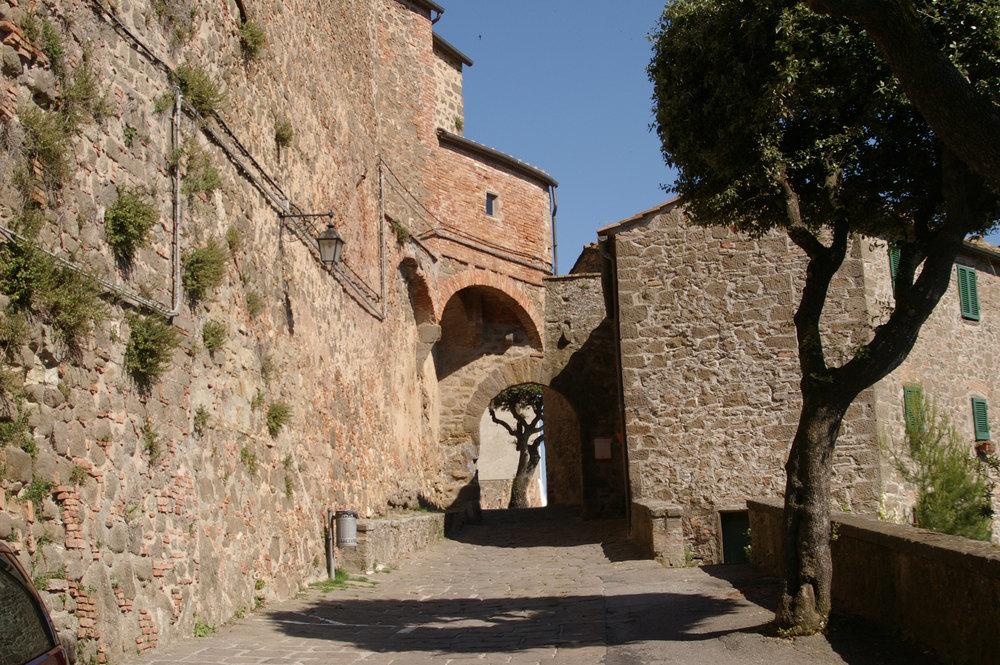
 somewhere. Not too far. I had
seen photos of Montecatini, near
Volterra, and it looked interesting. (This is Montecatini val de
Cecina. There is another town in Tuscany, Montecatini Terme, popular
for budget holidays because of its many hotels.)
somewhere. Not too far. I had
seen photos of Montecatini, near
Volterra, and it looked interesting. (This is Montecatini val de
Cecina. There is another town in Tuscany, Montecatini Terme, popular
for budget holidays because of its many hotels.)
The road there followed the route towards Volterra until there was a
turning that took me up the opposite side of the valley. It was steep
and narrow, and picturesque, taking me up over five hundred metres to
the village. Naturally, I'd made an on-line reconnaissance to check on
parking and verified the existence of a big car park at the top of the
town. I checked it out on arrival, but it was very exposed to the sun.
I turned around and found a space for the car in a little place off the
 main street.
Montecatini's claim to fame is its long history of mining, and its
major tourist attraction is the mining museum. I'm not particularly
fond of plodding round museums while on holiday -- I'd rather be out
absorbing the atmosphere of a place -- and a mining museum sounds
particularly dull. Sorry, Montecatini.
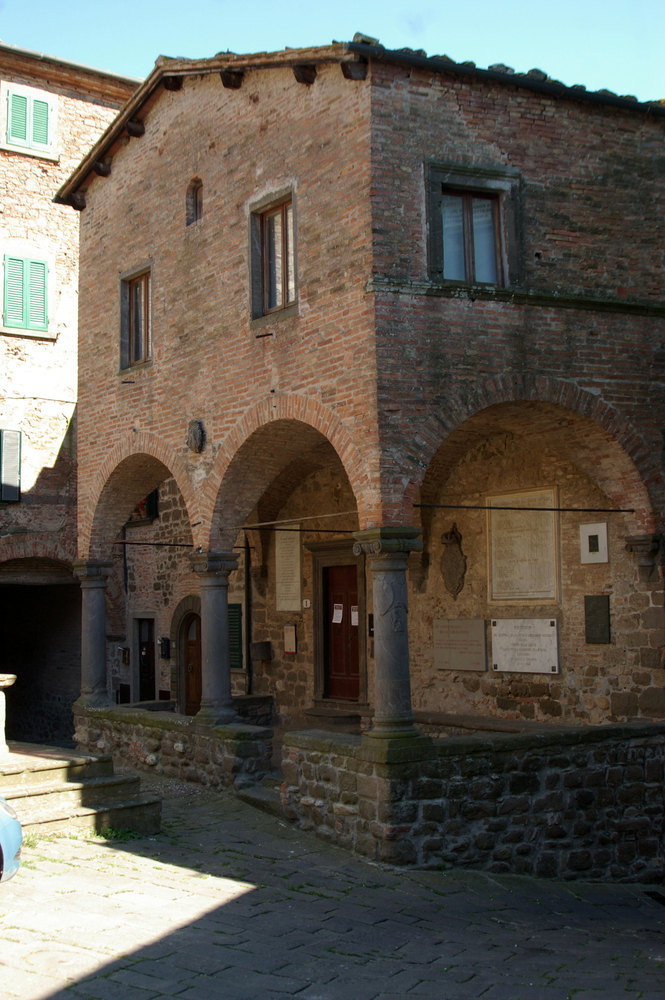
But I was happy enough to explore the village itself, which has much
evidence of its medieval past. I think the mining became uneconomic
hundreds of years ago, although it clung on, and after a period of
boom, there was nothing much happening in the town and the major
buildings were never updated or replaced.
From a vantage point on the walls, I could see both the moonscape of
grassed-over spoil heaps on the valley bottom, and Volterra lurking on
 its hilltop on the oposite
side. Since I'd seen everything there was to
see in Montecatini by about six (apart from the mining museum), I
thought I might as well carry on to Volterra for a last visit. My fuel
warning light was on, but I was sure I'd find a place to fill up in or
around Volterra, and so I did. Or at least I got the man to put a
frugal €20-worth in, since his prices were so high.
its hilltop on the oposite
side. Since I'd seen everything there was to
see in Montecatini by about six (apart from the mining museum), I
thought I might as well carry on to Volterra for a last visit. My fuel
warning light was on, but I was sure I'd find a place to fill up in or
around Volterra, and so I did. Or at least I got the man to put a
frugal €20-worth in, since his prices were so high.
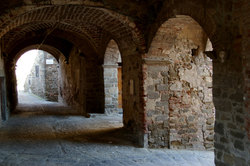
I parked by the Roman theatre in Volterra, and for the first time
climbed the long flight of
steps directly up to the city (I'd gone down
them once before, which is a lot easier). I caught up on a mature
couple of tourists in walking sandals at the top who moved off in
guilty fashion when I arrived. I guessed that they were embarrassed to
have had to take a breather, wheezing, after the climb. I took a
breather, wheezing.
I only spent a couple of hours, and didn't do much. But it's a
pleasantly atmospheric Tuscan
hill town. I noticed some largish hotels
on the outskirts, which made me think that it's common to base a
holiday in Volterra. I'd go for San Gimignano myself. (In fact, I have,
twice.)
It was under an hour to drive back home, just in time for dinner. After
dinner, I filled the watering can to water the many pots of flowers on
the balcony, (Roberta had seen me do it one afternoon, and had rather
grumpily asked me to leave it
until after sundown), and found that
they'd all be done. Clearly, someone had been in during the day.

Thursday 20th June
I didn't go out in the morning, instead doing some internet reseach for
a visit to Florence. I was planning to go for the San Giovanni
celebrations on the 24th (not the 23rd, as I'd misremembered until
then). Giovanni is their
patron saint, and there are parades and so on,
and the "Calcio Storico" or medieval football in Piazza Santa Croce. In
the early days when I'd visited Florence, it had been possible to sneak
a peek round the fences to see what was happening, but nowadays it's
very commercial and the screens are very efficient. I wouldn't be
interested in seeing a full match, and the tickets were sold out anyway.

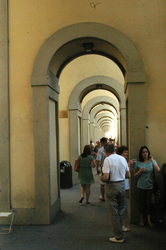 My first thought had been to drive to the
railway station in Pontedera, cutting the journey into road
and rail halves of under an hour each. I
spent some time with the online maps looking for free parking, because
I knew it would be difficult to find a place in a busy industrial town.
I didn't see anything promising.
My first thought had been to drive to the
railway station in Pontedera, cutting the journey into road
and rail halves of under an hour each. I
spent some time with the online maps looking for free parking, because
I knew it would be difficult to find a place in a busy industrial town.
I didn't see anything promising.
Then I thought of looking at a smaller town on the railway line, and
settled on San Romano. The train timetable was the same, since there is
no express from Pontedera to Firenze anyway: just stop-every-station
ones. It
looked like a good option on
the screen, but I wondered about making a
reconnaissance in person. And then I decided, well, why not an evening
trip to Florence this very day?
I left around four, expecting to be in Florence by six, although I had
no clear plan about what I'd do when I got there. Have a pizza, maybe.
Somehow, I got it into my head that I was going to San Romeo (perhaps
that's how it appears some map I'd seen) but it's definitely San
Romano. In fact, San Romano - Montopoli
- Santa Croce because the station is supposed to serve the three towns.
There's quite a
lot of Pontedera's industrial overspill on the way into the town, but
on arrival it seemed like a quaint little place. I found a parking
space quite easily, on a steep street facing the station.

 The station was small and
shabby, but there was a new automatic ticket
machine which I used to buy a return to Firenze, all stations, for
€5.10 each way, second
class. If I'd looked more carefully at my
tickets I'd have seen the alternate version of the town name, but I
just put them in my wallet (after "convalidating" the outward one in
the platform device).
The station was small and
shabby, but there was a new automatic ticket
machine which I used to buy a return to Firenze, all stations, for
€5.10 each way, second
class. If I'd looked more carefully at my
tickets I'd have seen the alternate version of the town name, but I
just put them in my wallet (after "convalidating" the outward one in
the platform device).
The train was on time, and the carriage, although old and worn, had
fully operational air conditioning. It was still very warm outside by
the time we reached Florence Santa Maria Novella station, or "Firenze
SMN" in official railway terms.
It's a big station, not unpleasant,
with trains to and from all points in Europe. I couldn't be bothered
perusing the departures list to find my return train, so I departed the
station and left it to luck. I knew there would be one.
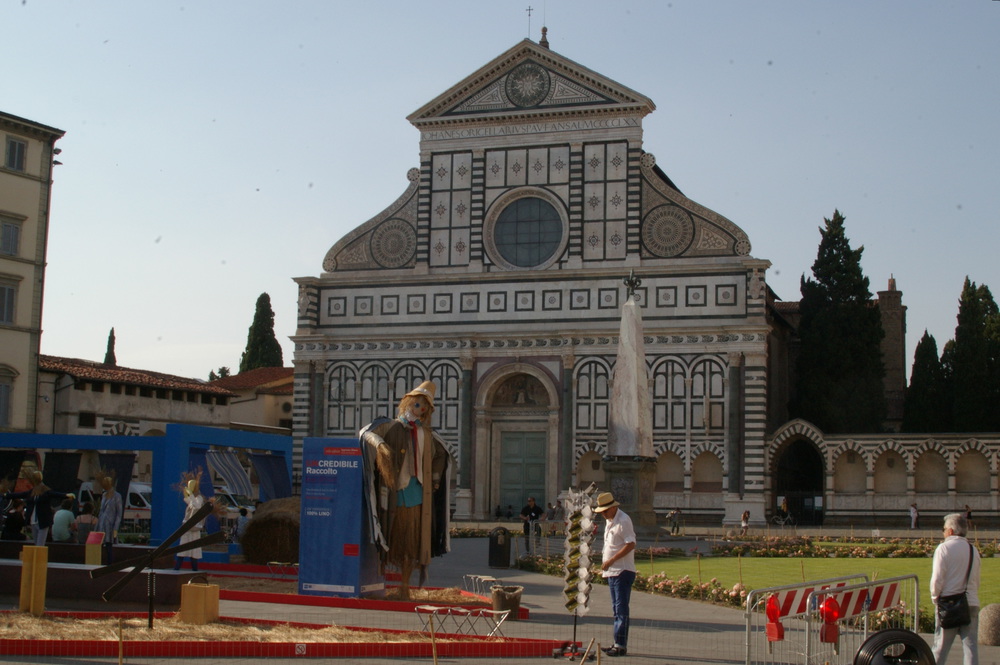
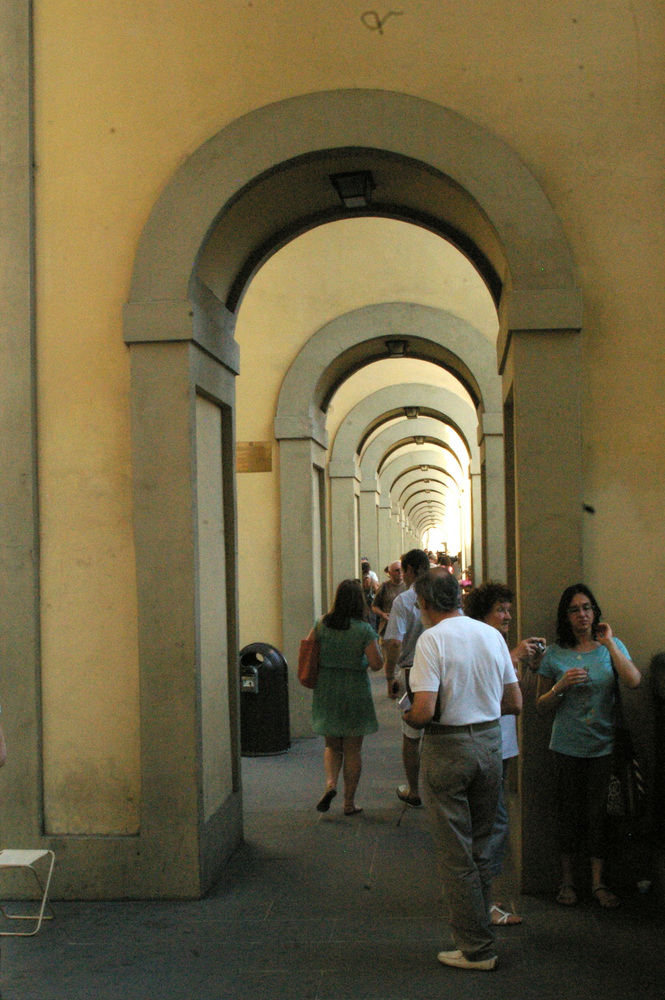
Immediately outside the station (itself a creation of
the Fascist period of architecture) isn't the prettiest part of
Florence, but if you walk down the side of the large church, SMN
itself, you quickly come out
in the piazza facing its façade.
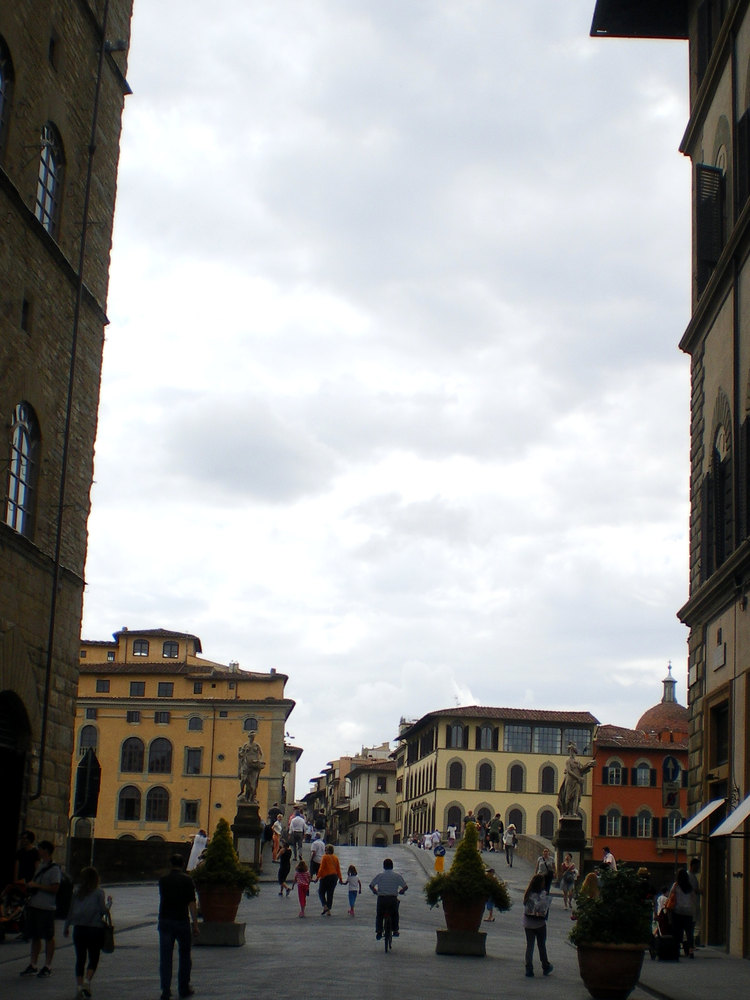
I moved slowly toward the river Arno, stopping to say hello to "Il
Porcellino", the Piglet, the local's ironic name for the full-scale
bronze of a magnificent wild boar at the Mercato Nuevo. (It's an old
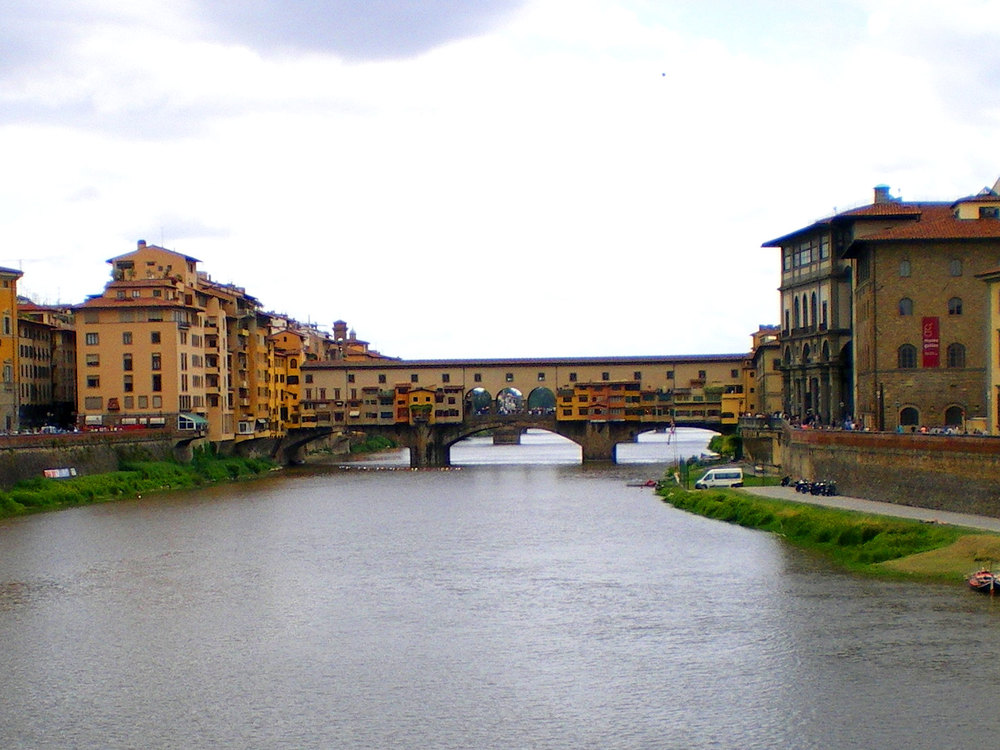
tradition, or a charter, or something.) I went half-way across the
Ponte Vecchio to take some photos. I'd have gone across to tour the
Oltrarno if I'd have time. I had a holiday apartment near Santo Spirito
 one year.
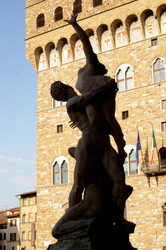
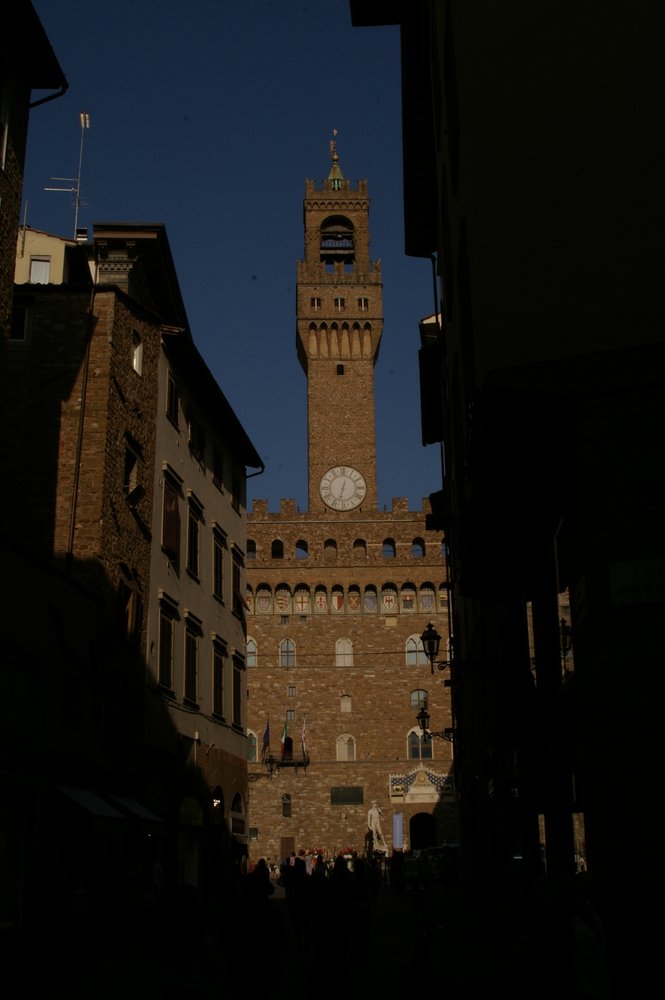
Turning downstream, I came to the point where the Uffizi meets the
river, the place where Helena Bonham-Carter's postcards got chucked in
the river, and walked through the valley between the building's two
wings to the centre point of Florence, the Pizza della Signoria. At the
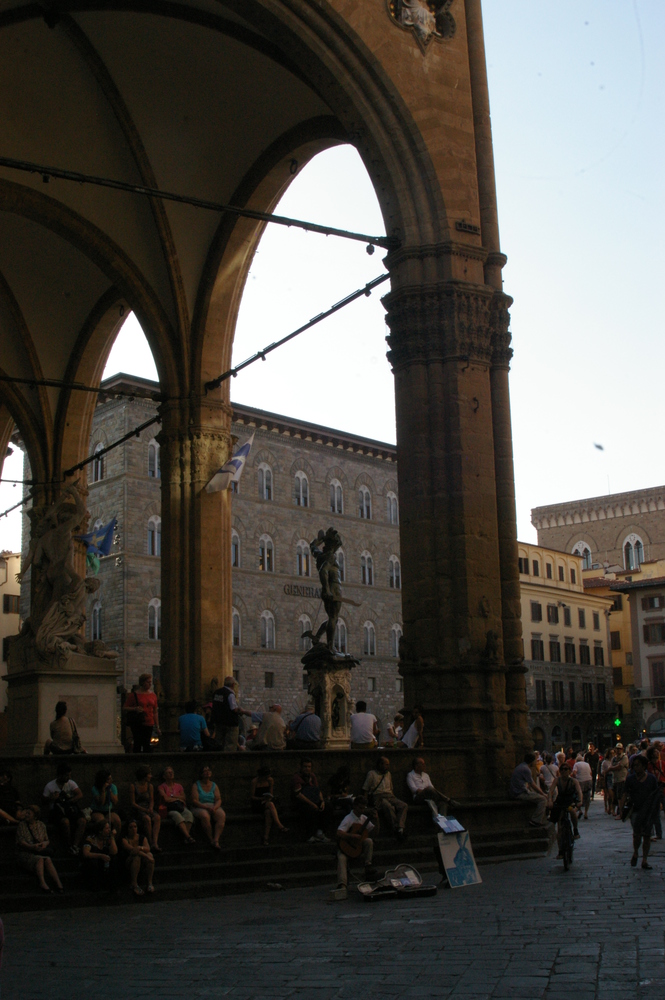
corner of the Loggia dei Lanzi, a busker was playing classical guitar,
adding a sense of occasion.

I went and sat in the Loggia for a while. There are officials who
supervise the tourists, and ensure that no eating, drinking or unseemly
behaviour goes on under the arches. You have to go out into the piazza
for that. I could still hear the guitarist, as he lanched,
surprisingly, into "Hotel California". You can check out any time you
like, but you can never leave.
 I did leave. It had occurred to me that if I was going to come back on
San Giovanni's day, access to Santa Croce would be cut off, and I'd
miss the opportunity to say hello to Galileo and his clever daughter
Suor Maria Celeste, plus Marconi, Fermi and other Italian greats. I
walked down familiar streets to Santa Croce, to discover that it's only
open to tourists until five-thirty, and it was around seven by then.
I did leave. It had occurred to me that if I was going to come back on
San Giovanni's day, access to Santa Croce would be cut off, and I'd
miss the opportunity to say hello to Galileo and his clever daughter
Suor Maria Celeste, plus Marconi, Fermi and other Italian greats. I
walked down familiar streets to Santa Croce, to discover that it's only
open to tourists until five-thirty, and it was around seven by then.
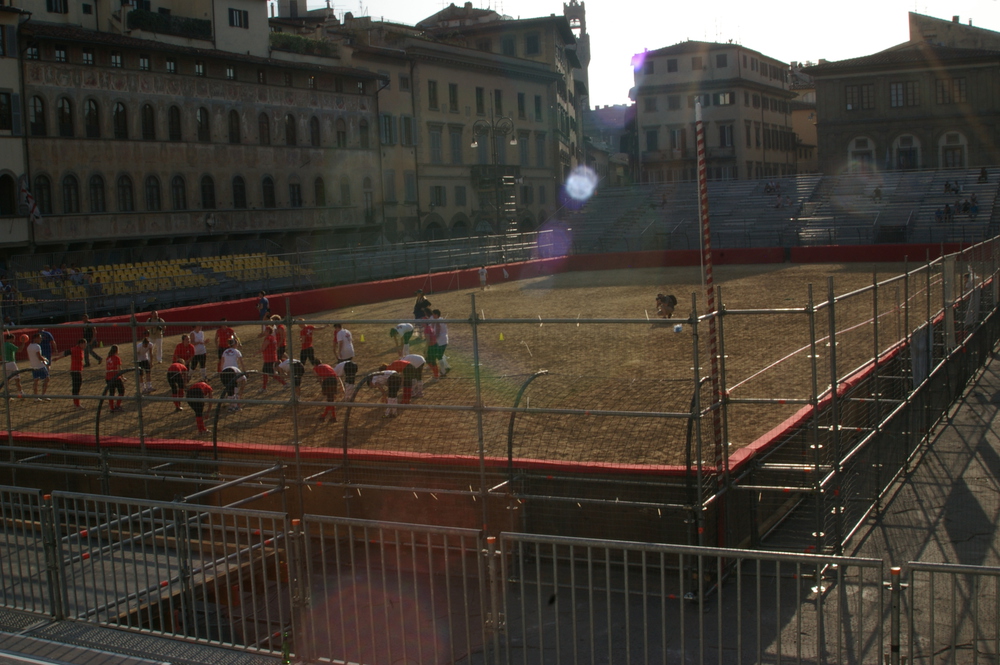
To compensate for my disappointment, I was able to clamber in to the
 arena which filled the whole
of the piazza in front of the church. On
San Giovanni the entire area would be closed to those with no ticket,
but I was able to have a look at all of it. There was even a team doing
some training on the sanded surface. (Not the actual competitors. They
are unmistakable: hard men who play a brutal sport.)
arena which filled the whole
of the piazza in front of the church. On
San Giovanni the entire area would be closed to those with no ticket,
but I was able to have a look at all of it. There was even a team doing
some training on the sanded surface. (Not the actual competitors. They
are unmistakable: hard men who play a brutal sport.)
I finally walked up to the Duomo and Baptistery, and made a circuit,
deciding that it would be a good time to have that pizza. I remembered
 that Piazza della Reppublica
was known for its restaurants, but when I
got there and took at look kat them, I realised I probably couldn't
afford to eat there. I took to the back streets and found a perfectly
acceptable place with modest prices.
that Piazza della Reppublica
was known for its restaurants, but when I
got there and took at look kat them, I realised I probably couldn't
afford to eat there. I took to the back streets and found a perfectly
acceptable place with modest prices.
At about nine, I walked back to the station, and had to work out how I
was getting home. I couldn't spot a likely-lookng train on the
departures board, and went to an automatic ticket machine. They have
all the schedules, so all I
had to do was start the ticket-buying
process and it would tell me all the options. That was when I
discovered that the name I remembered,
San Romeo, does not exist anywhere on Italian railways. After a moment
of panic, I checked my ticket
and discovered the name change. Autocomplete for "San Ro..." still
didn't give anything, but then I found that some need to be entered as
"S. R..." (and some not).
I asked the machine for a ticket to S. Romano then, and it showed me
two trains, one departing well after midnight, and another still later.
The latter involved a long wait at a connecting station, and an arrival
time after seven in the morning. This did not seem good. But then the
intermediate station didn't seem to make sense, and I went back a few
steps to discover that "S. Romano" and "S. Romano - Montopoli" are two
completely different stations. When I selected the correct one, I found
that my next train was leaving at 21:57.
 I had about 45 minutes to kill, and walked
back to Piazza Santa Maria
Novella, where people were gathered in the warm evening air, and an
electric-guitar busker was playing some blues.
I had about 45 minutes to kill, and walked
back to Piazza Santa Maria
Novella, where people were gathered in the warm evening air, and an
electric-guitar busker was playing some blues.
The train left on time, with a scheduled arrival in San Romano -
Montopoli of 22:45, but there was an unexplained delay in Empoli and it
was very nearly eleven when I arrived and walked the short distance to
the car. My TomTom predicted a
drive time of 45 minutes, which would
have been accurate if the Carabinieri hadn't stopped me at a random (?)
checkpoint about five kilometres outside Chianni. I could see the
officer regretting his decision in flagging me down when he realised
he'd have to transcribe my details off a foreign driving licence.
I got home just before midnight and went straight to bed.
Friday 21st June
 I got up at a leisurely hour
and took the computer out to the garden
house to back up the previous day's photos and the like. It wasn't
quite as hot as I expected, and at one point the wind blew some
unexpected blasts of cold air so strong that they lifted the garden
parasol up out of its socket, making it into a parachute. Fortunately,
Franco had cleverly tied it to immovable objects with three long
strings and it levitated,
bobbing in the air, before cash landing on
the table.
I got up at a leisurely hour
and took the computer out to the garden
house to back up the previous day's photos and the like. It wasn't
quite as hot as I expected, and at one point the wind blew some
unexpected blasts of cold air so strong that they lifted the garden
parasol up out of its socket, making it into a parachute. Fortunately,
Franco had cleverly tied it to immovable objects with three long
strings and it levitated,
bobbing in the air, before cash landing on
the table.
After fifteen minutes or so the strong wind abated, but it still was
relatively cool. There was even some cloud cover. Frankly, it was a
pleasant change. At about 12:35 I felt the ground shift sideways --
pretty sure it was a minor earthquake, or "terremoto". I checked the
time so that I could look it up afterwads to check if I was right.
After lunch, the sky was mainly blue again, with just a few puffs of
cloud, but there was still a cool breeze. I reckoned that a walk was in
order. I went up towards "Il Boschetto" park, and onwards into what I'd
been thinking of as "upper" Chianni. I'd only driven through
previously, and had the impression that it was the outcome of modern
growth of the village.
Though as I walked through the area I realised that there were old,
original houses of the seventeenth century or earlier, some in poor
repair. These seemed to be mostly along the main street, Via
Castellinese, the continuation of Via Roma which is the core of the
"lower" town. (In fact, my house was where the street changes its
name.) In past times, the village must have straggled up the hill for
quite a way, and then gradually some of the spaces have been filled in.
There were even some rather un-Italian modern developments, little
cul-de-sacs of suburban houses and apartments. There were a couple of
village grocery shops, including one which advertised, in Italian and
English, that it opened on Sunday mornings. The tourist office should
publish that, for visitors who arrive late on a Saturday, as is common.
Walking on up the hill (it was all up hill) I passed the "Welcome to
Chianni" sign, marking my departure from the town. There were
spectacular views over the
valley, although not any better than I could
have got from my own balcony. A little further on and there was a
picnic spot, and I decided to make that my turning point.
I strolled down into the village, a slightly different route to the one
I'd taken outward, and arrived directly home.
Saturday 22nd June

 It was intermittently cloudy
and cool, which I have to admit was a
relief, even for someone who craves the warmth of the sun. I was
conscious of only having a few days left in Italy, which made me feel a
little morose.
It was intermittently cloudy
and cool, which I have to admit was a
relief, even for someone who craves the warmth of the sun. I was
conscious of only having a few days left in Italy, which made me feel a
little morose.
I decided to drive the short distance to Casciana to visit the park
next to the thermal facility. On the way, I stopped to investigate a
feature not far from home which
I'd glimpsed while driving past several
times before. It was a bare valley of pale, almost white rock. I
couldn't decide if it was natural, or the remains of a quarry.
There was a flat verge, fit for one car, and next to it a little shrine
to the memory of three young men killed in a landslide in 1955 as they
worked to load a truck in the quarry. That clarified the nature of the
site then. One of the men had been Mario Tarrini, 25 at the time, or
four years older than my
landlord, Franco Tarrini. I wouldn't ask if
they were related.
 I climbed down into the valley, only
noticing then that the road above
crossed a large bridge. When passing on
I climbed down into the valley, only
noticing then that the road above
crossed a large bridge. When passing on  the road, the only sign is a
low parapet on each side, and it's not obvious that you are crossing a
bridge. The way down was well-wooded, but the bottom was a stark scar
where a river had cut through rock. There was little if any water
running on the upstream side,
just a large pool with fish and tadpoles.
There seemed to have been an artifical barrier across, made of stones
in a wire cage, perhaps to make a swimming hole. But some time in the
recent past the torrent had blasted a hole through it, metres wide.
Further down, an entire tree had wedged between the rock walls and now
formed a bridge for athletic squirrels.
the road, the only sign is a
low parapet on each side, and it's not obvious that you are crossing a
bridge. The way down was well-wooded, but the bottom was a stark scar
where a river had cut through rock. There was little if any water
running on the upstream side,
just a large pool with fish and tadpoles.
There seemed to have been an artifical barrier across, made of stones
in a wire cage, perhaps to make a swimming hole. But some time in the
recent past the torrent had blasted a hole through it, metres wide.
Further down, an entire tree had wedged between the rock walls and now
formed a bridge for athletic squirrels.
Downstream of the proper bridge, the river, although hardly a torrent,
was flowing quite nicely.
Since the water wasn't coming from the
upstream half, I can only assume that there was a spring somewhere
which I couldn't see. There was a spooky atmosphere in the deep valley.
A few ribbons were tied to tree branches, and discarded bottles
suggested drinking parties in the woods.
I happened to notice some rubbish, which on investigation turned out to
be little plastic jewellery boxes, the ones you get with cheap items. A
shop-robber's discards, was my
first thought. One box even bore the
gold lettering of "Niccola, Chianni". Then I saw something glinting,
and pulled out a cheap gold broach. Applying my detective skills, I
ascertained that the pin was bendy from use, proving that the item was
not new. Not stolen from a shop then, but no other conclusions were
warranted.
In the vicinity there were a
couple of wooden direction-pointing arrows, confusingly, pointing
towards each other; and a wooden, painted
porcupine model, in good repair. I simply have no idea.
the vicinity there were a
couple of wooden direction-pointing arrows, confusingly, pointing
towards each other; and a wooden, painted
porcupine model, in good repair. I simply have no idea.
When I got to Casciana, there weren't many people in the park half, but
the pool was quite busy, even though the weather was much cooler than
normal. The pool and park belong to the organisation which runs the
"hospital" which peddles acqua cures from the thermal springs.
Presumably they do such good business that making the swimming pool
open to the public is not a
significant cost to them.
I needed a final few essential food items, such as wine, and thought
I'd go on from Casciana to Lari, where I'd passed a large, smart Conad
supermarket. I like to mix my supermarkets, even when at home because
I'd get bored shopping in the same place every time. And in a foreign
country, if you're nervous about your language skills, a supermarket is
a stress-free way to shop, since you can just pick up everything you
need.
I brought my stash back home and got ready to go out. It would be my
third and final visit to the village pizzeria. It was quieter this
time, and I overheard the male half of a young English couple helping
an English family to order their food (they speak no English in the
pizzeria). I heard him mention that they had been living in the
mountains near Verona for three years, hence the good Italian.
The pizzeria seemed to be a family business, and they may well be from
Naples, as they claim their pizzas to be authentically Neopolitan. The
lady of the house is very dark-skinned. Short and wide, with black hair
piled high and artifical eybrows. She reminded me a little of Divine.
After my porcini topping pizza, at a mere €6.50 and €4 for
wine, I
walked up to the other end of the village to witness this week's
village hop. I'd passed the
poster the other day and had seen that the
artistes for the night were "Honda Durto", an Italian pun on "onda
d'urto", or "shock wave". Any hopes raised by the prospect of a shock
wave were dashed when they started up. It was a guy with a programmed
synth and a girl with a microphone. Exactly like the two previous weeks.
Still, it is popular with the locals. It seemed to be an older
cross-section this time, and seemed to be couples out for dancing. I
counted eleven pairs on the
floor during one of the more popular
numbers. (Which all sounded much the same to me.) On my previous nights
I'd passed the time by having a couple of beers, but this time the
dreadful music drove me away after one.
Sunday 23rd June
In the morning, Franco came up with another bottle of wine, and a bag
of cherries from the garden.
It was still overcast and not particularly
warm.
 In the afternoon, I went out on
a walk. I'd seen the "strada bianca"
which ran down the right side of the valley. If you've not been to
Italy, the "white roads" are ubiquitous: unpaved, but founded on the
marble chips that give them their white colour. I've stayed more than
once in premises which have a kilometre or more of white road as their
only connection to
civilization, some well-maintained, some less so.
In the afternoon, I went out on
a walk. I'd seen the "strada bianca"
which ran down the right side of the valley. If you've not been to
Italy, the "white roads" are ubiquitous: unpaved, but founded on the
marble chips that give them their white colour. I've stayed more than
once in premises which have a kilometre or more of white road as their
only connection to
civilization, some well-maintained, some less so.
This one was reasonable, identified on the local map as "Strada
Vicinale Del Poggio". It meandered down one side of the valley directly
overlooked by my balcony at home. Over on the other side, I could see
the Oratory of Santa Maria del Carmine, Franco's first mass chapel, and
I used it as a fixed point. As long as I knew where it was, I could
orient myself. I thought I could probably go down the valley, acoss a
flatter bit, and the back home
via the church.
And so it proved to be. At one point a friendly mutt pounced on me with
welcoming excitement, but I saw no humans. There were some houses, both
modern retreats and old, decrepit farmhouses. There were cars parked
outside some, but nothng stirred. It was coming up on four o'clock, but
perhaps still too early for post-siesta activity.
By taking the correct turning towards the church each time, I
eventually came out onto a public, paved road, and then the actual road
I was familiar with, straight out of Chianni. I spent a while in the
vicinity of the church, resting, since it was all up hill by then, and
eventually walked through the village back home.
Monday 24th June
I had a specific plan for the day. It was the Feast of John the
Baptist, San Giovanni, and he's the patron saint of Florence. There are
celebrations every year, including the "Calcio Storico", or "Calcio in
Costume", costumed, historical football. (The "costume" is stripy
billowing pantaloons, socks and trainers. They play bare-chested.)
Teams of 27 fight it out in the Piazza Santa Croce, which is
temporarily fitted out with a sand pitch, and these days, metal
terracing and seats. I do mean "fight it out". I'm not sure if there
are rules -- probably similar to Aussie rules football: no knifing, no
shooting.
In less commercial times, a decade ago, you could peek around the
stands and get a glimpse of the action, but now the whole area is out
of bounds to non-ticket-holders. In fact, the best view I've had was on
television where I watched the first few minutes. You can tackle
anyone, regardless of where the ball is, so on the starting whistle the
lines instantly dissolved into squirming couples, wrestling around on
the ground. Whatever floats your boat.
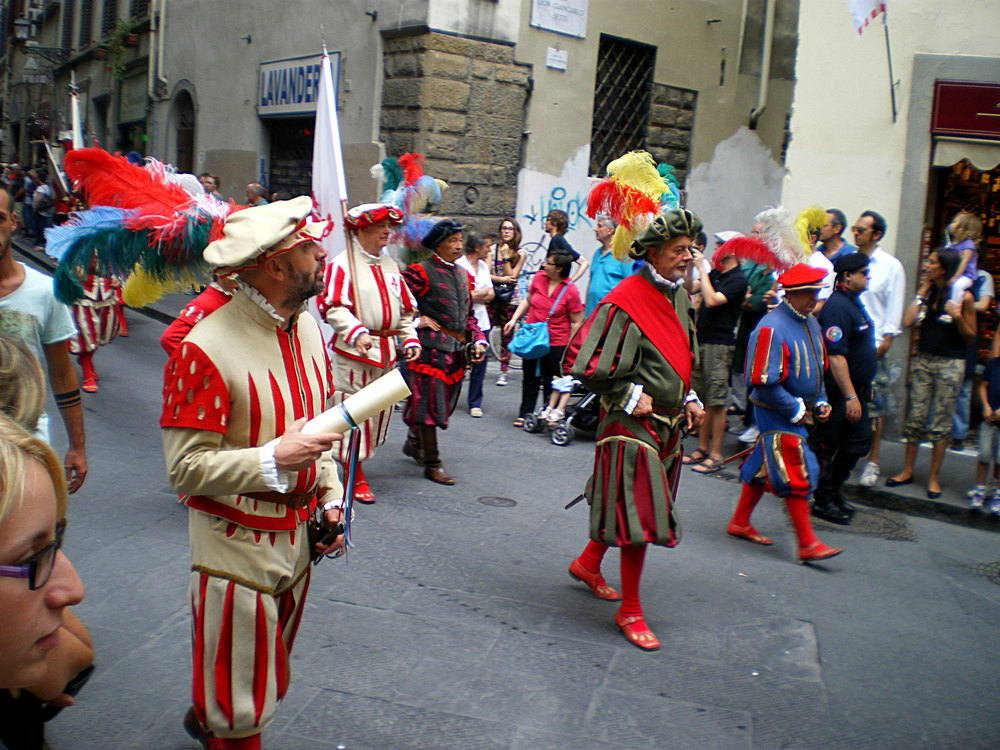
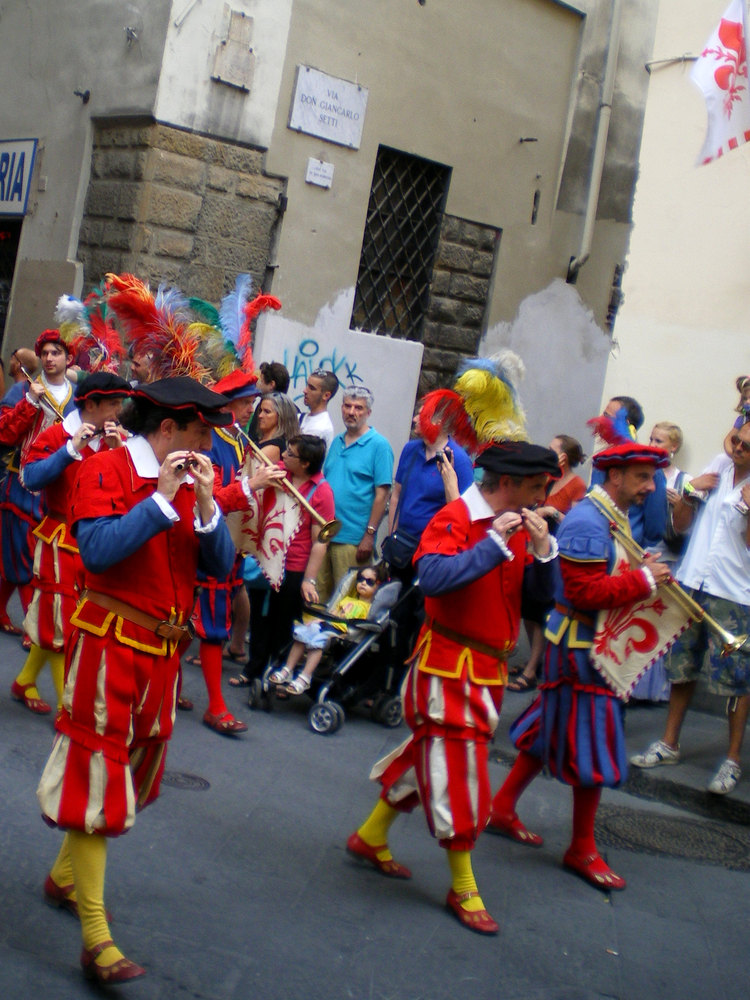
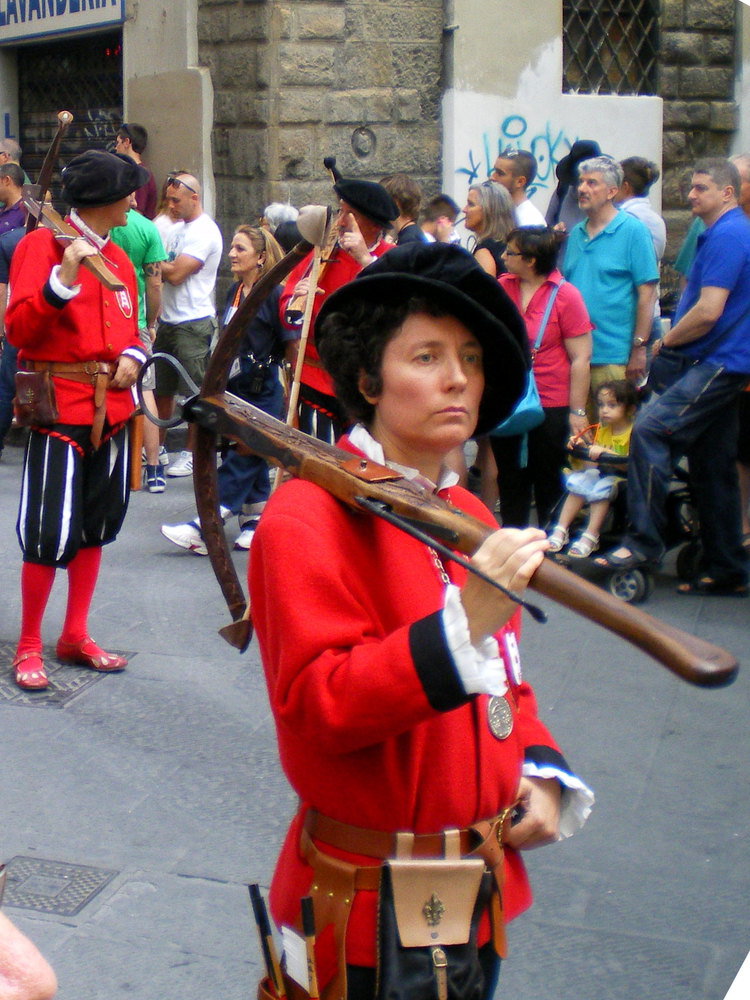
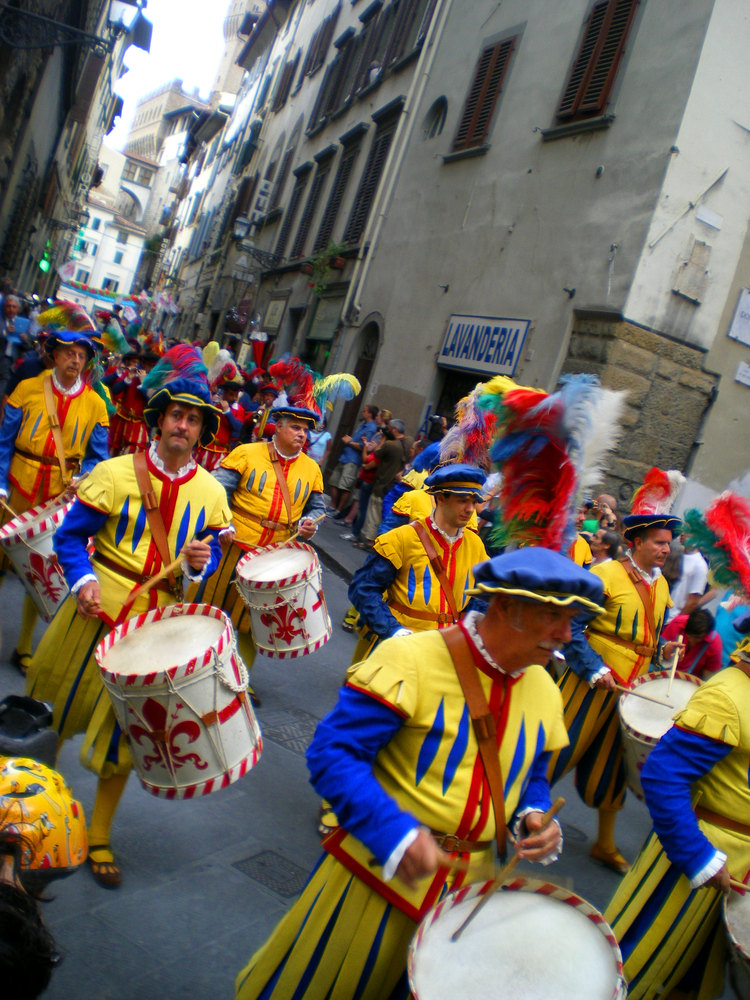
But my own preferences lie in colourful parades, and noisy drums.
Unlike San Gimignano, where the theme is medieval, Florence's festival
looks back to the city's glory days of the Renaissance. There are
feathered plumes, and codpieces, and gowns of velvet, and much slashing
to show contrasting colours.

I hadn't seen a timetable, but I thought that if I arrived in the early
afternoon, I'd be bound to catch something. I did know that the
fireworks display was at ten, and I'd made sure (this time) to write
down the return train times, right up to midnight. The journey out was
straightforward, (apart from the ticket-collector pointing out that I'd
punched the return ticket instead of the outward one), and I arrived to
a moderately cool Florence with some patchy cloud in the sky.
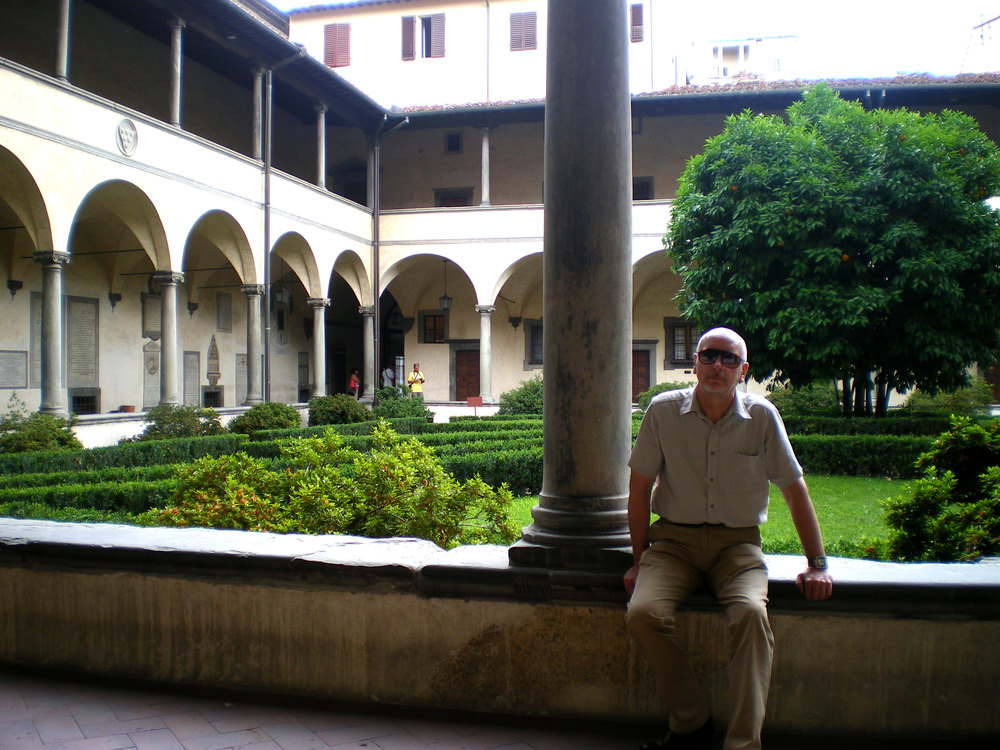
After the obligatory visit to
the cloister at San Lorenzo, an oasis of
peace in the city; and photographic self-portrait therein; I crossed
the river to see some of the Oltrarno, which I hadn't had time to
re-visit the previous time. I'd stayed near Santo Spirito for a couple
of week's holiday once. The Oltrarno is shabbier and smellier than the
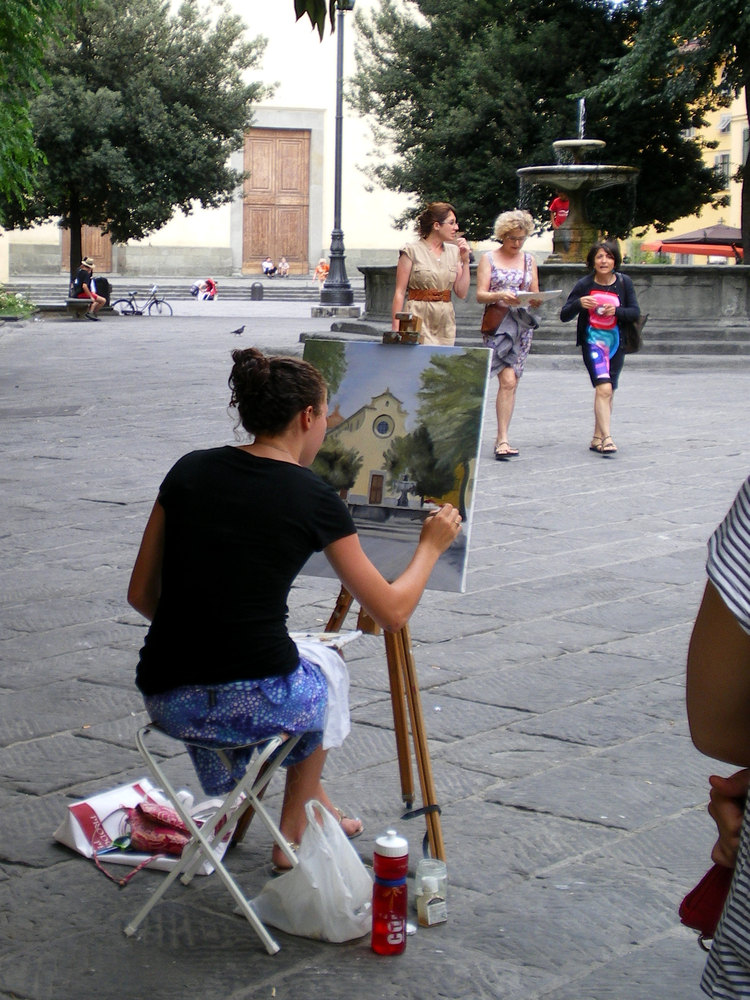
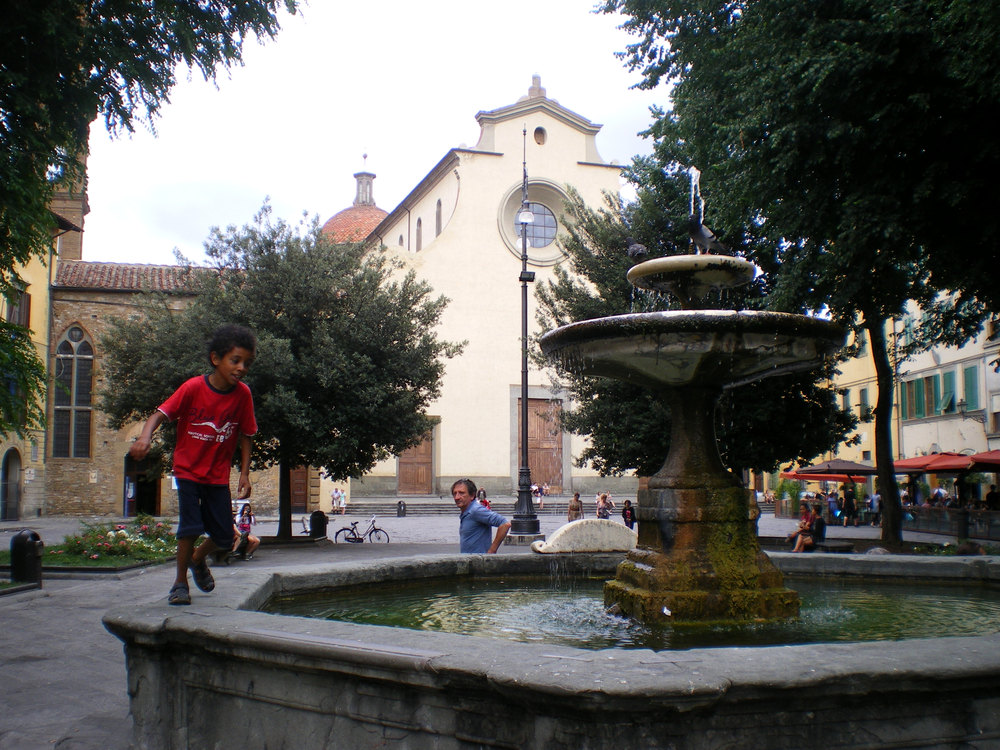
other side, but it has its charms. In Piazza Santo Spirito, an art
class was painting views of the church. The was not much else going on.
The other thing I like to do in Florence is to climb up to the vantage
point of Piazzale Michelangelo to take in the iconic view over the
city, but the Piazzale is where they launch the fireworks, and I found
the way up blocked off, and mannned by police. I could probably have
found a way around, perhaps going up to San Miniato instead, but I'd
been walking quite a lot already, and was hungry, and decided to return
to the sweeter-smelling side of the city and have a sit down and a
sandwich.
I'd had my sandwich and was having a look round the lobby of the
Palazzo Vecchio (the lower floor is open without a ticket, the upper
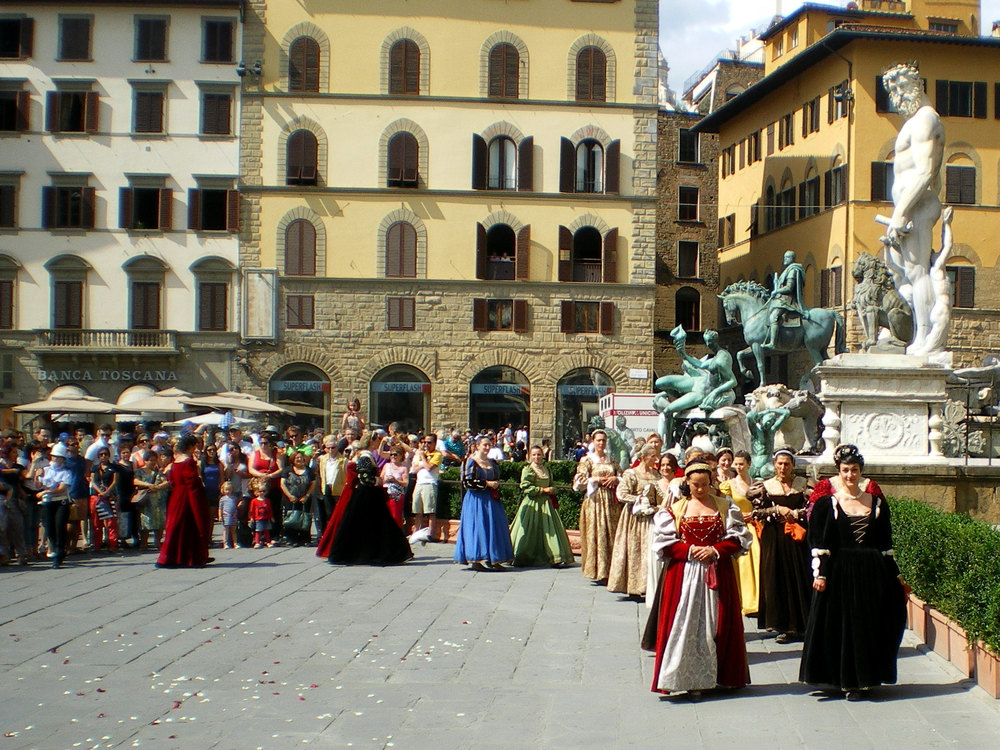
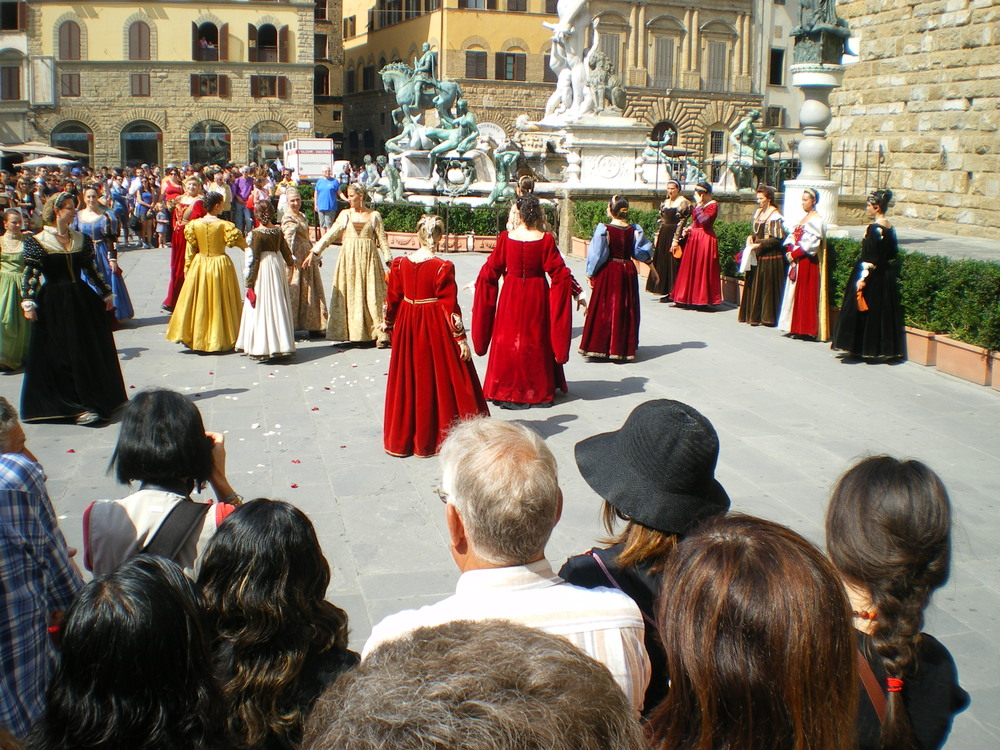
part is a museum and still, the town hall) when I heard music. I went
out to the front of the building and found costumed ladies dancing in
courtly fashion. That was the sort of thing I'd come for.
After the ladies were done,
they waited, arranged on the steps of
the
building, and eventually I heard a drum beat. The parade was coming.
It's a very long parade, everyone in renaissance costume, and takes
about half an hour to pass on the way to the historical football. I
couldn't get a very good view in Piazza Signoria because of the crowds,
so I left and headed them off at the pass on the way to Santa Croce,
where just a few spectators lined the streets.
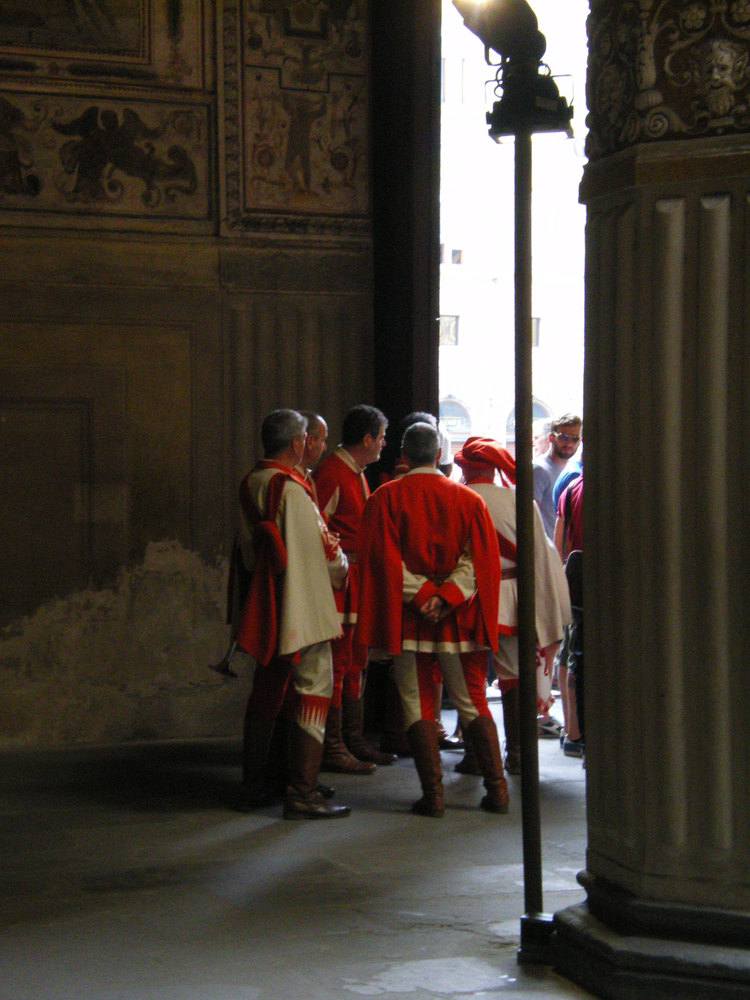
 The players themselves are
hard-looking bastards, much tattooed, with
hair shaved or cut into patterns. That contrasts with the rest of the
cortege. Even supposed bands of warriors are more in it for the
dressing up. I wondered if some of them grew renaissance beards
speciialy for the occasion, or whether they looked like that in
everyday life.
The players themselves are
hard-looking bastards, much tattooed, with
hair shaved or cut into patterns. That contrasts with the rest of the
cortege. Even supposed bands of warriors are more in it for the
dressing up. I wondered if some of them grew renaissance beards
speciialy for the occasion, or whether they looked like that in
everyday life.
After they had all passed, it had become overcast, and I even felt a
few spots of rain. Thunderstorms had been forecast, and I thought it
was worth getting a place to sit in the Loggia before rain started.
Good move. The rain, when it came, wasn't exceptionally heavy, but
steady enough. People crowded under the shelter until there was
standing room only. People sitting around the steps allowed others to
squeeze in, in unfamiliar familiarity.
Peddlars appeared, African and Asian mainly, with miraculous supplies
of inadequate little umbrellas and plastic ponchos. Deals were done.
For myself, I was already prepared, having placed a compact poncho in
my jacket pocket. It was a freebie from Easyjet (I think I filled in a
questionnaire or something) and I'd never previously used it.
For two hours, I sat there.
People went "ooh" when there was a
particularly impressive lightning bolt in the sky. I was counting the
seconds until the thunder arrived, of course. The speed of sound is
around 330 kilometres per second, so a count of three means the strike
was a kilometre away, and so on. The storm didn't seem to be moving
away at all.
 Watching the rain wash the piazza, I saw a
line of wet footballers
slouching dispiritedly across the square between the umbrella'd and
poncho'd tourists. I thought it was too early for the match to be over,
and guessed they must have abandoned it.
Watching the rain wash the piazza, I saw a
line of wet footballers
slouching dispiritedly across the square between the umbrella'd and
poncho'd tourists. I thought it was too early for the match to be over,
and guessed they must have abandoned it.
I decided I'd wait until seven thirty, then brave the rains and find a
pizzeria. Actually, I had to wait a little after, because some people
sat down beside me exactly at that time. You can't just get up and
leave immediately, or they might be offended.
I got up and opened up my sealed poncho for
the first time ever. It was
thinner plastic than the ones which had been bought around me, but the
Easyjet logo wasn't too embarrassing. I put it on without putting my
arms out the arm holes, and walked up to Borgo San Lorenzo, off the
cathedral piazza, where I knew there were some economical pizzerias.
Dining on pizza, even in Florence or Rome, is good value. This time,
the pizza cost the same as in my village place, but the wine was twice
as expensive.
When I'd finished the meal it was still raining. I had wanted to stay
for the fireworks, but wasn't prepared to tolerate the weather any
more. I walked up to the station and caught the next train home.
Tuesday 25th June

 I
checked the news when I got
up and confirmed that the Calcio Storico
had indeed been abandoned, a replay planned. The article I found said
that the pitch had become a "carpet of mud", "un tappeta di fango".
I
checked the news when I got
up and confirmed that the Calcio Storico
had indeed been abandoned, a replay planned. The article I found said
that the pitch had become a "carpet of mud", "un tappeta di fango".
Last day. I started to pack. I kept expecting one of the family to turn
up and say goodbye, or check the state of the premises, or ask what
time I was leaving, but nobody approached me.
I took a walk through the village in the afternoon. Since I had
arrived, workmen had been renovating an old woodland park in the deep
ravine between the main village and the road up to Rivalto (the road
does a tight hairpin around the ravine, and the pizzeria sits on the
far side from the main village). The focus of the park is an old,
ruined mill, now tidied up and safety-fied (although not in the extreme
way it would be done in Britain).
There seemed to be no work going on and nobody present, giving me the
chance to take an illicit survey by climbing over a drooping section of
the red plastic safety barrier. From the first mill, there was a walk
down the side of the valley to another, which I hadn't been able to see
from up above. Both must have used water power. At the upper one, there
were remaining stone structures where the mill mechanism would have
turned. These were discs of stone with drainage channels. I had had a
flour mill in mind, but these were clearly for liquid purposes,
presumably olive oil. (After all, wine is trampled.)

 After dinner, when I used up
most of my remaining food and wine, I took
out a bag of empty bottles to the recycling bin down the village, and
the carried on for one final look. It was dark by then, and very quiet,
with only a few diners outside Le Vecchie Cantine, and only a few
people at the two bars.
After dinner, when I used up
most of my remaining food and wine, I took
out a bag of empty bottles to the recycling bin down the village, and
the carried on for one final look. It was dark by then, and very quiet,
with only a few diners outside Le Vecchie Cantine, and only a few
people at the two bars.
I came back and went down into Franco's garden and looked out at the
lights across the valley. It was beautiful, warm and windless.
Fireflies flickered through Franco's olive grove. A romantic and
sentimental last night in Tuscany.
Wednesday 26th June
I'd worked out that I would have to leave at nine in order to get to
the airport with acceptable contingency. In fact, I didn't sleep well,
and got up before the alarm. I took out the trash and did a final brush
up to make sure the place was presentable. Of course, the owners will
most likely never see me again -- I could have left the place looking
like a bomb scene -- but that's not my style. Presbyterian ethic.
I took the case out to the car, looking out for Franco to say goodbye,
but there was no sign of him, and none of the house's doors or windows
were open. Eventually I rung the bell, and Mrs Franco, Anna, eventually
appeared on the balcony. I hadn't really talked to her since I arrived.
I said I had to leave. She asked why. I said it was for my flight. She
said she thought I was staying until Friday. That explained why there
had been no interest in me the day before.
Franco was out, but I handed Mrs Franco the key and drove away forever.
The car rental company, Goldcar (of España) have a scam where
they
require you to pay for a tankful of fuel on hiring the car, and return
it empty. It used to be the opposite arrangement with hire cars: you
returned the car re-filled and thus didn't have to pay them for the
fuel. But some accountant probably worked out that cars would be coming
back with enough residual fuel to make it a nice little earner.
In addition, they'd charged me 90 euros for the fuel, with no
indication of how many litres that got me, and from the number of
kilometres I'd done before the first warning light, I suspect it was a
good bit more expensive than the garage prices.
All in all then, I was determined not to leave a generous amount of
petrol when I returned the car. In fact, when I'd brought it home on
the Monday, the warning light was on, and the "Range" reading was 55km.
The airport was 48km away, and I thought I'd make it. The Fiat "Range"
calculation is too volatile to be relied on, but the display still
showed 55km when I set off.
However, less than ten minutes later, a chime sounded, and the car's
display showed an urgent low-fuel alarm. The Range reading changed
immediately to "---". I chickened out. Casciana was a short distance
ahead, with several petrol stations, and I pulled in to the first one.
Most of the stations I came across in Italy have converted to automatic
payment. There's a machine next to the pumps which takes cash or
plastic. When I stopped next to pump 3, there was a man at the machine,
presumably the owner of the car ahead of me at pumps 1 & 2. He was
using a credit card and looked a little uncertain, but he left the
machine and went toward the pumps. I assumed he'd finished and went to
take the turn.
The machine's screen was saying "Select pump to be used" (in English)
so I pressed "3". It then said "Pump activated. Fill fuel as required."
That was when I realised that the confused gentleman had not completed
his interaction with the machine, and that I had in effect hijacked his
purchase to my pump. Since he'd been working the machine in English, I
explained to him what had happened, and suggested that I quickly put in
the ten euros that I needed, give him it in cash, and he could then
start the process again, older but wiser. His English was perfect, but
he had a slight accent. I think he may have been Dutch.
A rural idiot had pulled in his Ape right behind, sandwiching me
between the two vehicles, but with some manoeuvering, I got the car
between the two pump islands and out. I hadn't lost too much time. The
car was claiming its range was now 250 kilometres. Ten euros should
only have got me less than 200. It was obviously a liar. However, it
got me to the airport with no further distractions, and the Goldcar man
quickly checked to see that I hadn't wrecked his car and signed the
sheet.
I walked to the terminal rather than use the shuttle bus, given that
it's only 450 metres. They've marked out the distances on the walkway
so that you know how well you're doing. Check-in was already open, but
there was no queue, allowing me to dump my suitcase and head for the
departure gate. The airport has a separate section of gates for
non-Schengen departures (UK, Albania, Russia, and similar dodgy places)
with a more spartan finish and no shops. Verona airport was like that
too.
I decided that I was thirsty and that I'd buy a Coke, even though it
was €2.50 from the machine. I put in my money and selected the
number.
The €2.50 credit flashed to zero, and the mechanism pushed out the
bottle, which fell down and got wedged in another outlet further down.
I kicked and shook the machine, but it was stuck. The place where it
was wedged held bottles of mineral water, at €1.20 each. If I
bought a
bottle of water, the mechanism would cause both the Coke and the water
to come out, I was pretty certain. At least I wouldn't be down on the
transaction, even though I'd be buying bottled water that I didn't need.
But when I was about to put in more money, I saw that the credit figure
had gone back to €2.50. The machine knew that it had failed to
deliver
my Coke! I put in the code for the mineral water, and both bottles came
thudding down into the delivery tray. Then the machine clinked out
€1.30 change. A win!
That, really was the highlight of the day. Air travel is tedious, and
air travellers are the biggest herd of gormless cretins that you can
meet. Seeing as this one was going to Belfast, it was worse than usual.
Also, the "Summer" weather at the home end was very poor. My holiday
was definitely over.
Weekly Index
^UP^
 somewhere. Not too far. I had
seen photos of Montecatini, near
Volterra, and it looked interesting. (This is Montecatini val de
Cecina. There is another town in Tuscany, Montecatini Terme, popular
for budget holidays because of its many hotels.)
somewhere. Not too far. I had
seen photos of Montecatini, near
Volterra, and it looked interesting. (This is Montecatini val de
Cecina. There is another town in Tuscany, Montecatini Terme, popular
for budget holidays because of its many hotels.)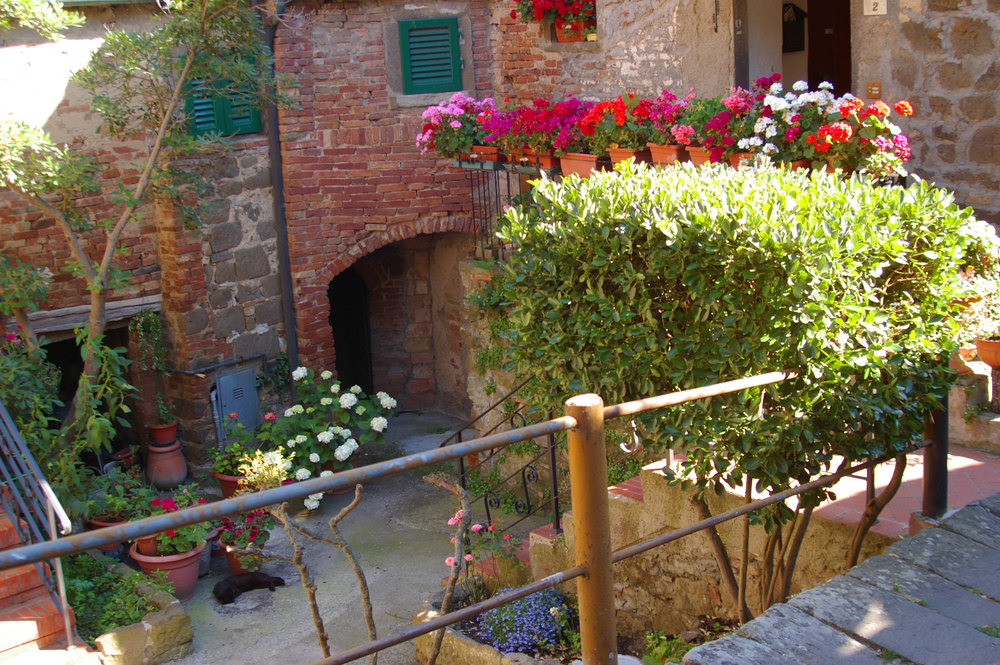 main street.
 its hilltop on the oposite
side. Since I'd seen everything there was to
see in Montecatini by about six (apart from the mining museum), I
thought I might as well carry on to Volterra for a last visit. My fuel
warning light was on, but I was sure I'd find a place to fill up in or
around Volterra, and so I did. Or at least I got the man to put a
frugal €20-worth in, since his prices were so high.
its hilltop on the oposite
side. Since I'd seen everything there was to
see in Montecatini by about six (apart from the mining museum), I
thought I might as well carry on to Volterra for a last visit. My fuel
warning light was on, but I was sure I'd find a place to fill up in or
around Volterra, and so I did. Or at least I got the man to put a
frugal €20-worth in, since his prices were so high.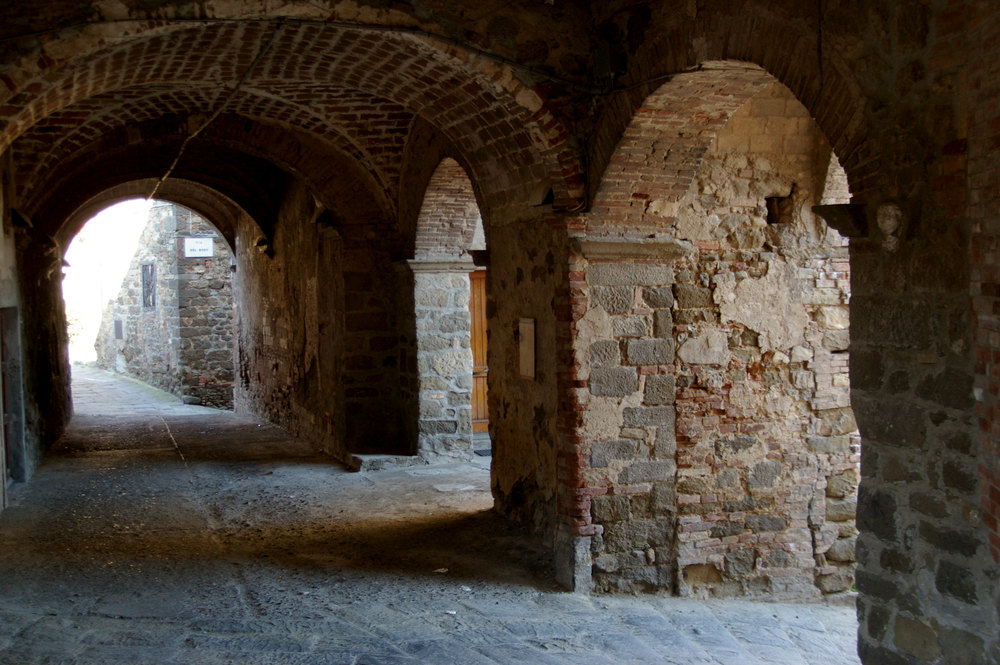

 My first thought had been to drive to the
railway station in Pontedera, cutting the journey into road
and rail halves of under an hour each. I
spent some time with the online maps looking for free parking, because
I knew it would be difficult to find a place in a busy industrial town.
I didn't see anything promising.
My first thought had been to drive to the
railway station in Pontedera, cutting the journey into road
and rail halves of under an hour each. I
spent some time with the online maps looking for free parking, because
I knew it would be difficult to find a place in a busy industrial town.
I didn't see anything promising.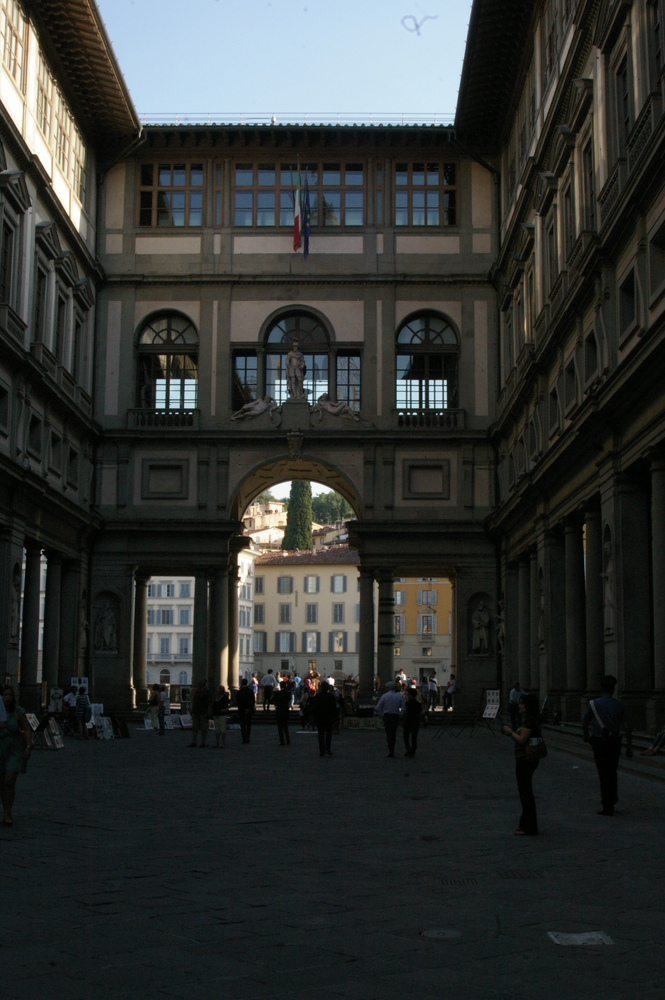
 The station was small and
shabby, but there was a new automatic ticket
machine which I used to buy a return to Firenze, all stations, for
€5.10 each way, second
class. If I'd looked more carefully at my
tickets I'd have seen the alternate version of the town name, but I
just put them in my wallet (after "convalidating" the outward one in
the platform device).
The station was small and
shabby, but there was a new automatic ticket
machine which I used to buy a return to Firenze, all stations, for
€5.10 each way, second
class. If I'd looked more carefully at my
tickets I'd have seen the alternate version of the town name, but I
just put them in my wallet (after "convalidating" the outward one in
the platform device). one year.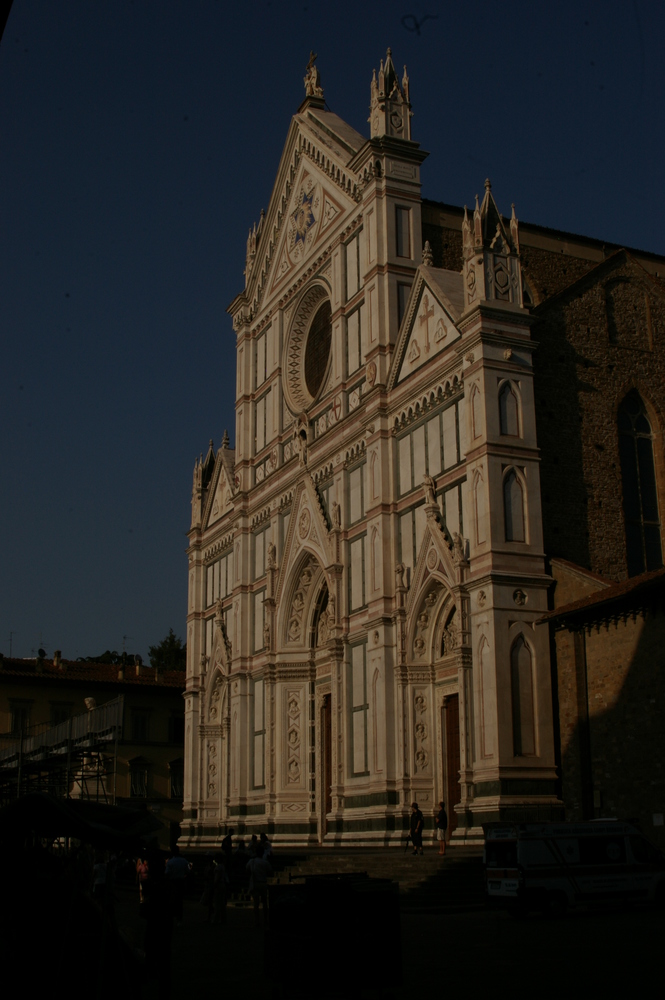
 I did leave. It had occurred to me that if I was going to come back on
San Giovanni's day, access to Santa Croce would be cut off, and I'd
miss the opportunity to say hello to Galileo and his clever daughter
Suor Maria Celeste, plus Marconi, Fermi and other Italian greats. I
walked down familiar streets to Santa Croce, to discover that it's only
open to tourists until five-thirty, and it was around seven by then.
I did leave. It had occurred to me that if I was going to come back on
San Giovanni's day, access to Santa Croce would be cut off, and I'd
miss the opportunity to say hello to Galileo and his clever daughter
Suor Maria Celeste, plus Marconi, Fermi and other Italian greats. I
walked down familiar streets to Santa Croce, to discover that it's only
open to tourists until five-thirty, and it was around seven by then.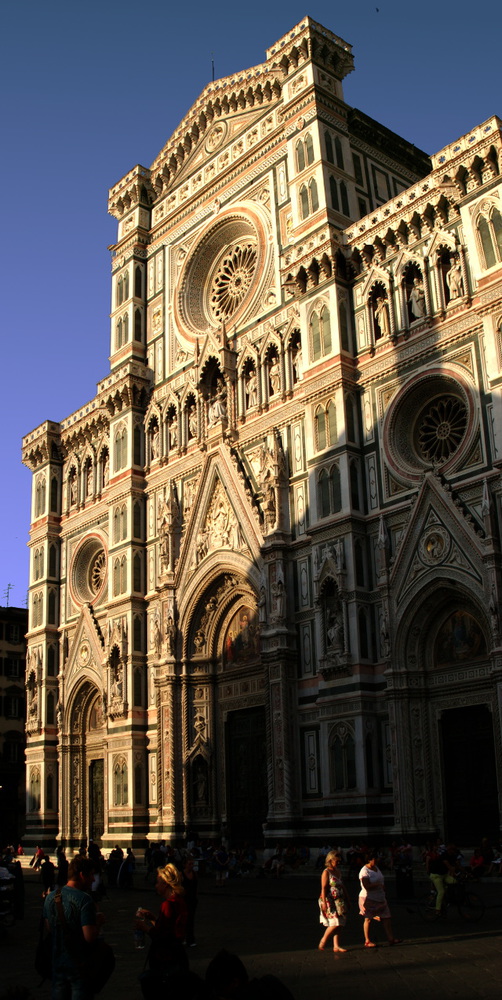 arena which filled the whole
of the piazza in front of the church. On
San Giovanni the entire area would be closed to those with no ticket,
but I was able to have a look at all of it. There was even a team doing
some training on the sanded surface. (Not the actual competitors. They
are unmistakable: hard men who play a brutal sport.)
arena which filled the whole
of the piazza in front of the church. On
San Giovanni the entire area would be closed to those with no ticket,
but I was able to have a look at all of it. There was even a team doing
some training on the sanded surface. (Not the actual competitors. They
are unmistakable: hard men who play a brutal sport.) that Piazza della Reppublica
was known for its restaurants, but when I
got there and took at look kat them, I realised I probably couldn't
afford to eat there. I took to the back streets and found a perfectly
acceptable place with modest prices.
that Piazza della Reppublica
was known for its restaurants, but when I
got there and took at look kat them, I realised I probably couldn't
afford to eat there. I took to the back streets and found a perfectly
acceptable place with modest prices. I had about 45 minutes to kill, and walked
back to Piazza Santa Maria
Novella, where people were gathered in the warm evening air, and an
electric-guitar busker was playing some blues.
I had about 45 minutes to kill, and walked
back to Piazza Santa Maria
Novella, where people were gathered in the warm evening air, and an
electric-guitar busker was playing some blues.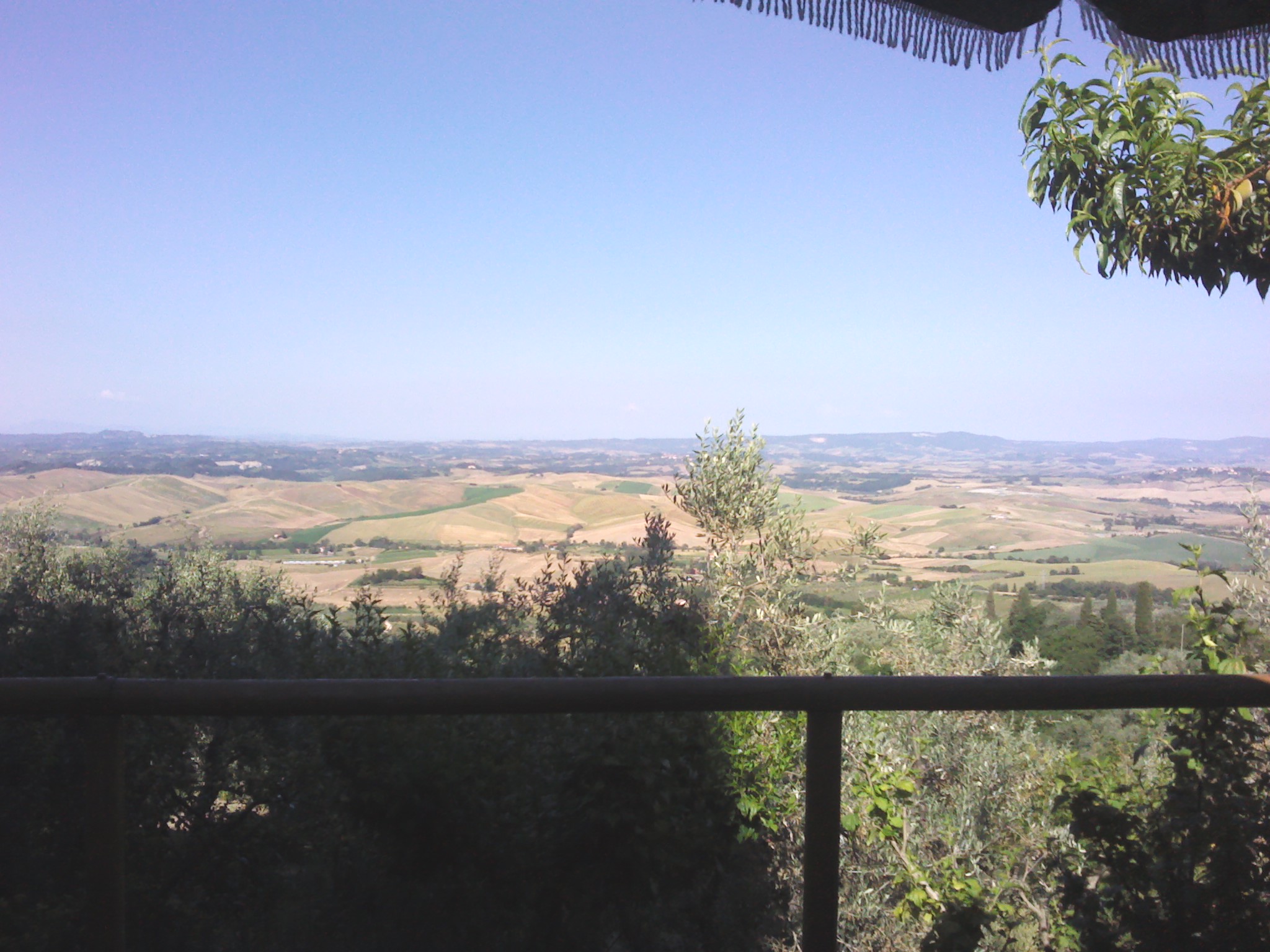 I got up at a leisurely hour
and took the computer out to the garden
house to back up the previous day's photos and the like. It wasn't
quite as hot as I expected, and at one point the wind blew some
unexpected blasts of cold air so strong that they lifted the garden
parasol up out of its socket, making it into a parachute. Fortunately,
Franco had cleverly tied it to immovable objects with three long
strings and it levitated,
bobbing in the air, before cash landing on
the table.
I got up at a leisurely hour
and took the computer out to the garden
house to back up the previous day's photos and the like. It wasn't
quite as hot as I expected, and at one point the wind blew some
unexpected blasts of cold air so strong that they lifted the garden
parasol up out of its socket, making it into a parachute. Fortunately,
Franco had cleverly tied it to immovable objects with three long
strings and it levitated,
bobbing in the air, before cash landing on
the table.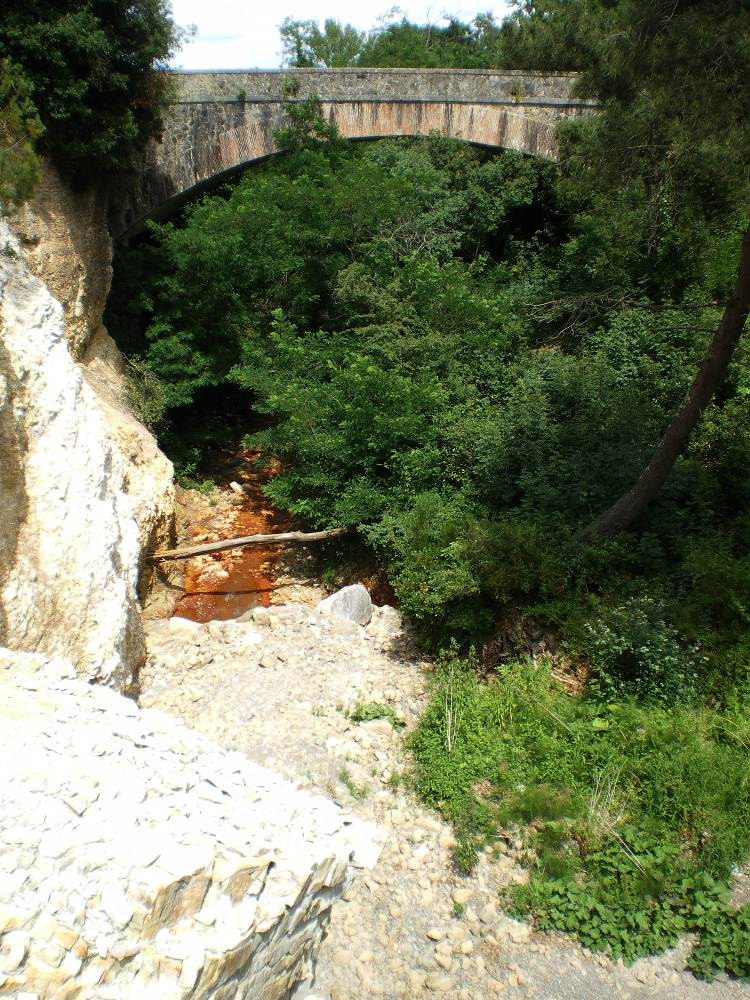
 It was intermittently cloudy
and cool, which I have to admit was a
relief, even for someone who craves the warmth of the sun. I was
conscious of only having a few days left in Italy, which made me feel a
little morose.
It was intermittently cloudy
and cool, which I have to admit was a
relief, even for someone who craves the warmth of the sun. I was
conscious of only having a few days left in Italy, which made me feel a
little morose.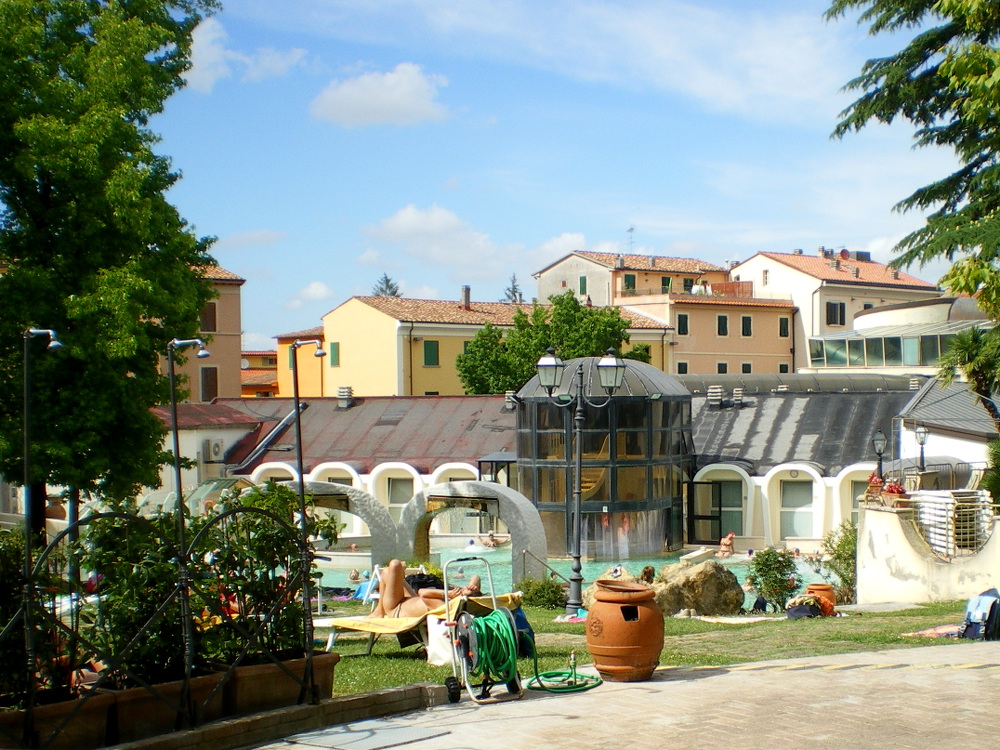 I climbed down into the valley, only
noticing then that the road above
crossed a large bridge. When passing on
I climbed down into the valley, only
noticing then that the road above
crossed a large bridge. When passing on  the road, the only sign is a
low parapet on each side, and it's not obvious that you are crossing a
bridge. The way down was well-wooded, but the bottom was a stark scar
where a river had cut through rock. There was little if any water
running on the upstream side,
just a large pool with fish and tadpoles.
There seemed to have been an artifical barrier across, made of stones
in a wire cage, perhaps to make a swimming hole. But some time in the
recent past the torrent had blasted a hole through it, metres wide.
Further down, an entire tree had wedged between the rock walls and now
formed a bridge for athletic squirrels.
the road, the only sign is a
low parapet on each side, and it's not obvious that you are crossing a
bridge. The way down was well-wooded, but the bottom was a stark scar
where a river had cut through rock. There was little if any water
running on the upstream side,
just a large pool with fish and tadpoles.
There seemed to have been an artifical barrier across, made of stones
in a wire cage, perhaps to make a swimming hole. But some time in the
recent past the torrent had blasted a hole through it, metres wide.
Further down, an entire tree had wedged between the rock walls and now
formed a bridge for athletic squirrels.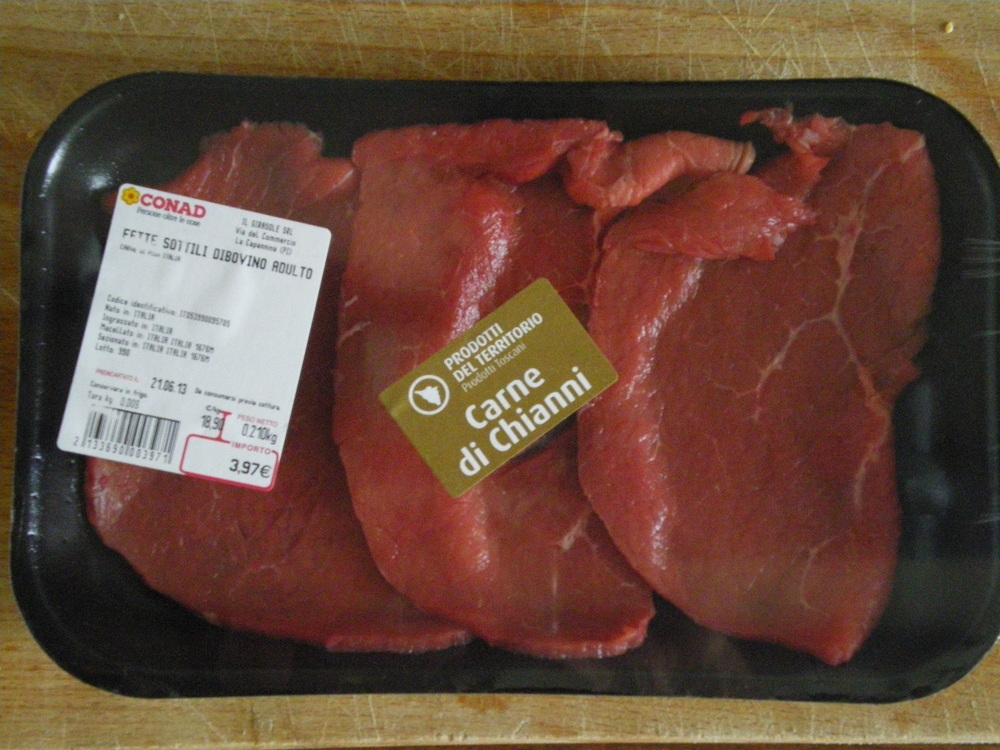 the vicinity there were a
couple of wooden direction-pointing arrows, confusingly, pointing
towards each other; and a wooden, painted
porcupine model, in good repair. I simply have no idea.
the vicinity there were a
couple of wooden direction-pointing arrows, confusingly, pointing
towards each other; and a wooden, painted
porcupine model, in good repair. I simply have no idea. In the afternoon, I went out on
a walk. I'd seen the "strada bianca"
which ran down the right side of the valley. If you've not been to
Italy, the "white roads" are ubiquitous: unpaved, but founded on the
marble chips that give them their white colour. I've stayed more than
once in premises which have a kilometre or more of white road as their
only connection to
civilization, some well-maintained, some less so.
In the afternoon, I went out on
a walk. I'd seen the "strada bianca"
which ran down the right side of the valley. If you've not been to
Italy, the "white roads" are ubiquitous: unpaved, but founded on the
marble chips that give them their white colour. I've stayed more than
once in premises which have a kilometre or more of white road as their
only connection to
civilization, some well-maintained, some less so.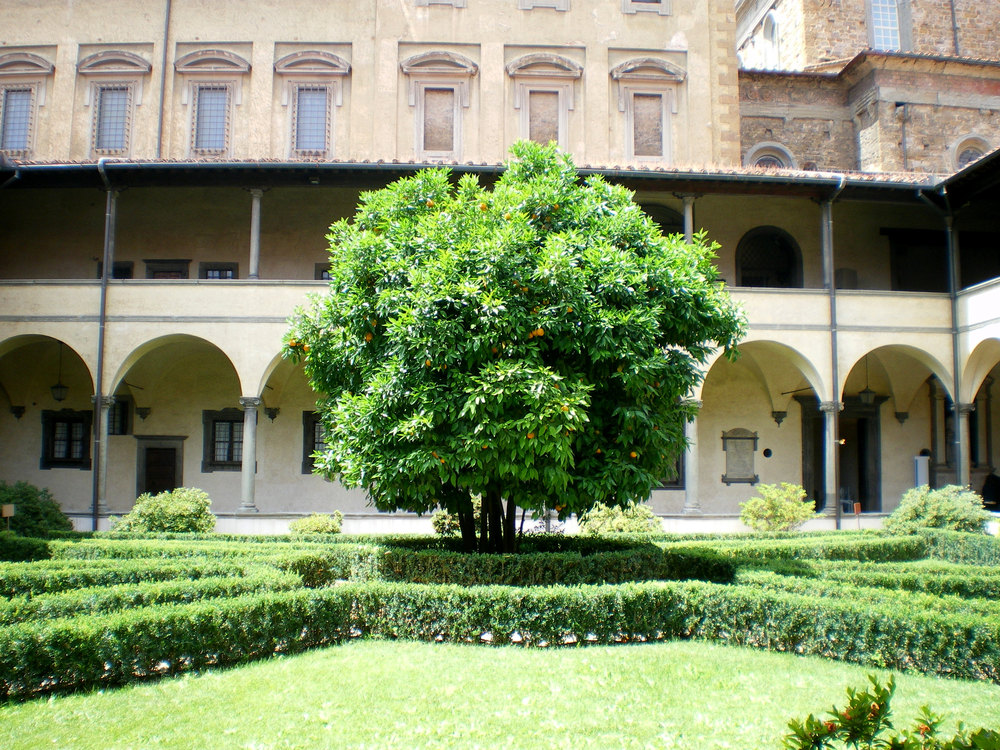

 The players themselves are
hard-looking bastards, much tattooed, with
hair shaved or cut into patterns. That contrasts with the rest of the
cortege. Even supposed bands of warriors are more in it for the
dressing up. I wondered if some of them grew renaissance beards
speciialy for the occasion, or whether they looked like that in
everyday life.
The players themselves are
hard-looking bastards, much tattooed, with
hair shaved or cut into patterns. That contrasts with the rest of the
cortege. Even supposed bands of warriors are more in it for the
dressing up. I wondered if some of them grew renaissance beards
speciialy for the occasion, or whether they looked like that in
everyday life.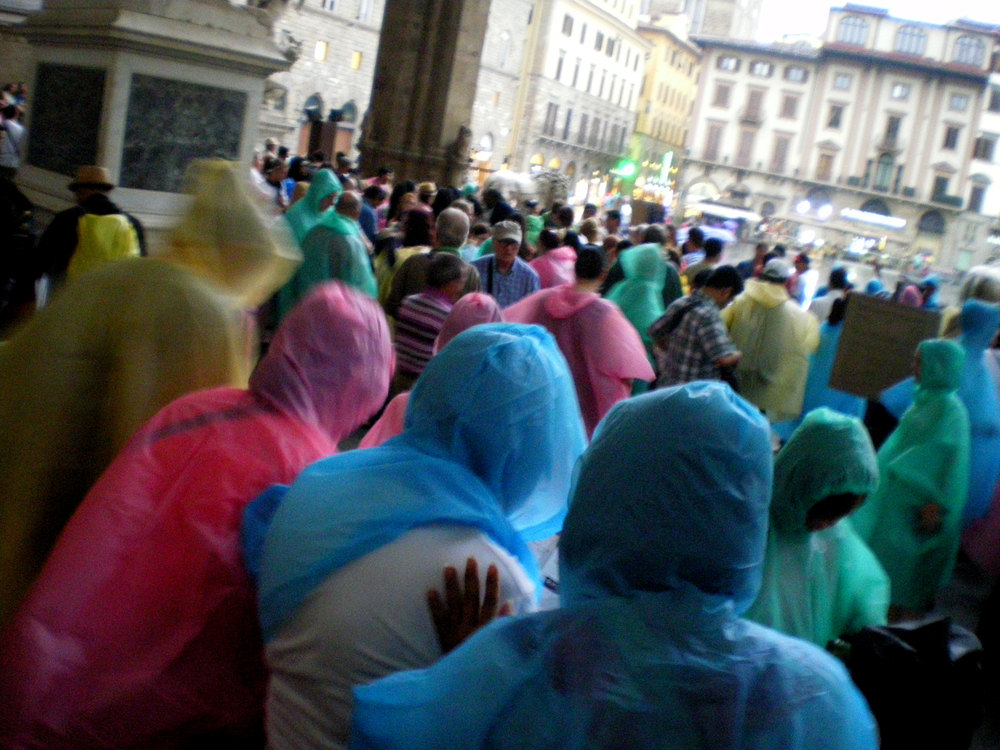 Watching the rain wash the piazza, I saw a
line of wet footballers
slouching dispiritedly across the square between the umbrella'd and
poncho'd tourists. I thought it was too early for the match to be over,
and guessed they must have abandoned it.
Watching the rain wash the piazza, I saw a
line of wet footballers
slouching dispiritedly across the square between the umbrella'd and
poncho'd tourists. I thought it was too early for the match to be over,
and guessed they must have abandoned it.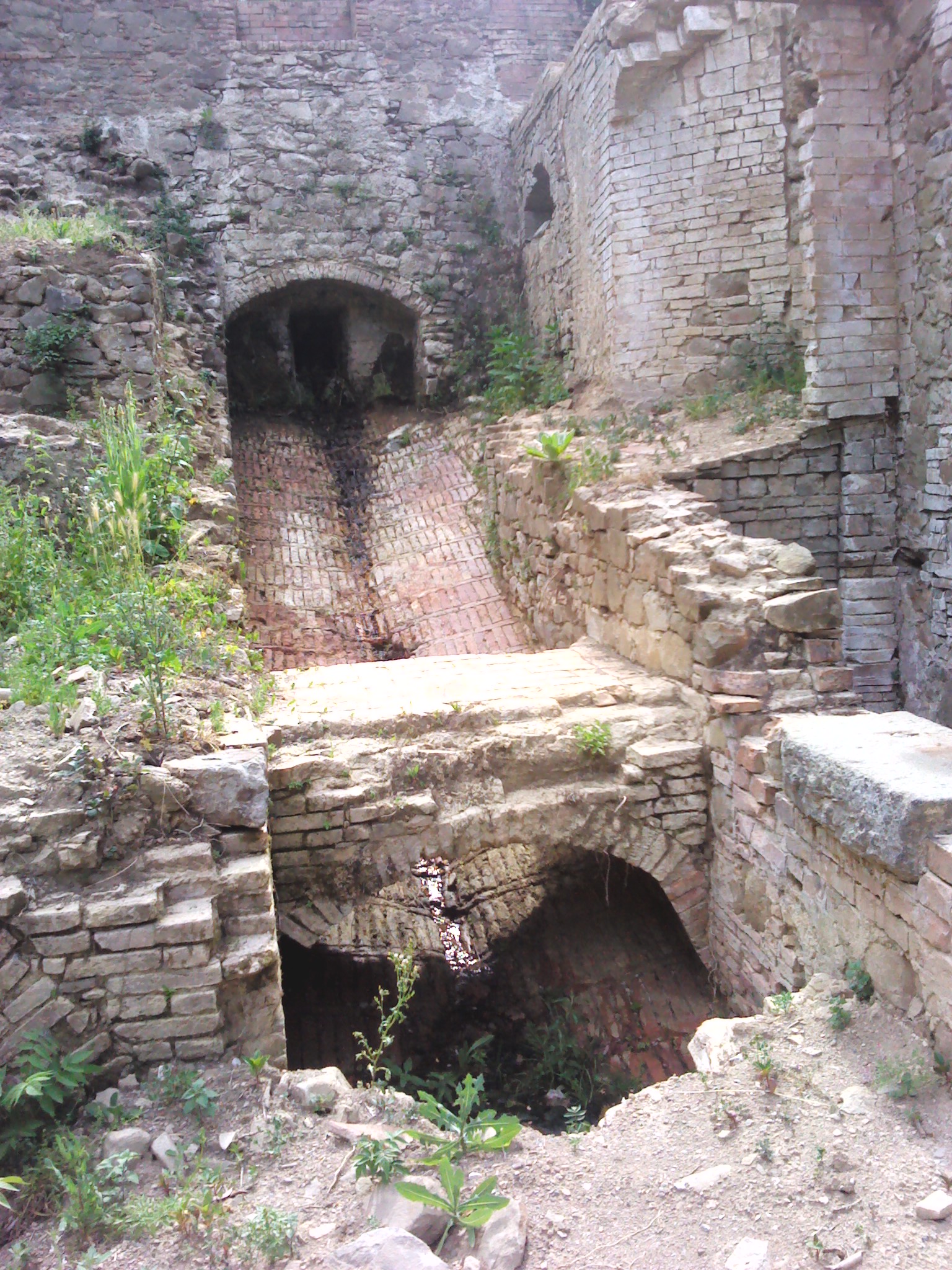
 I
checked the news when I got
up and confirmed that the Calcio Storico
had indeed been abandoned, a replay planned. The article I found said
that the pitch had become a "carpet of mud", "un tappeta di fango".
I
checked the news when I got
up and confirmed that the Calcio Storico
had indeed been abandoned, a replay planned. The article I found said
that the pitch had become a "carpet of mud", "un tappeta di fango".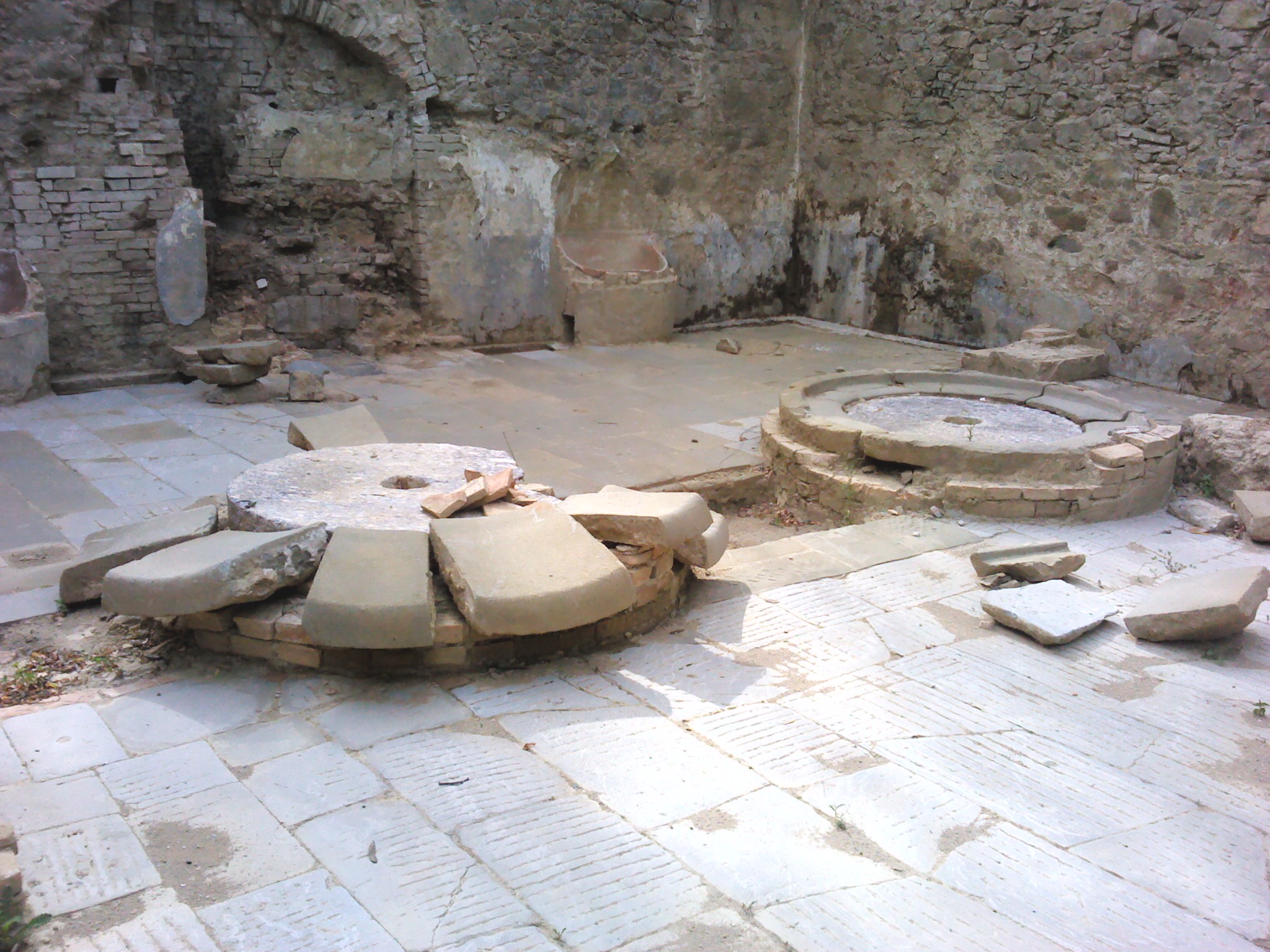
 After dinner, when I used up
most of my remaining food and wine, I took
out a bag of empty bottles to the recycling bin down the village, and
the carried on for one final look. It was dark by then, and very quiet,
with only a few diners outside Le Vecchie Cantine, and only a few
people at the two bars.
After dinner, when I used up
most of my remaining food and wine, I took
out a bag of empty bottles to the recycling bin down the village, and
the carried on for one final look. It was dark by then, and very quiet,
with only a few diners outside Le Vecchie Cantine, and only a few
people at the two bars.