^UP^
We walked the short distance to Oktogon metro station to interrogate a machine for travel passes. Although a week-long pass seems to exist, the machine was only offering 72-hours. It would do. From the adjacent bus stop, we took the 105 bus, which goes all the way to Buda, across the river.
We got off the bus at the square named after Adam Clark, the Scottish engineer who designed the Chain Bridge. The square contains the foot of the 1870 "Sikló" funicular and we bought tickets for it. It's a very short journey, but I suppose it saves a steep climb. Anyway, it's historic.

|

|

|

|
| Funicular |
Chain Bridge from the top. |
Houses of Parliament. |
'Turul' bird. Apparently, it was Árpád's grandfather. |
Now, at some point, I accendentally jogged the dial on my camera to the "Creative Filters" setting, and took several photos in antique black-and-white without noticing. Applying filters in the camera is usually a bad thing, since you can never get the "real" picture back, but in this case I'll accept the retro look.

|
|

|

|
| Guards at the Palace. |
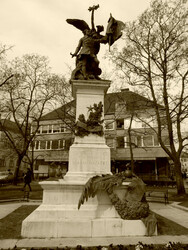
Statue of the Independence War. |
Matthias Church. |
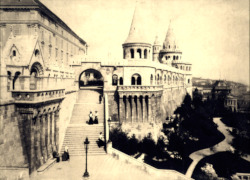
Fishermen's Bastion. |

|
|

|

|
| Steps at Fishermen's Bastion. |
A real vintage photo. |
Matthias Church. |
Back in colour! |

|

|
| Deliberate B&W. |
The funicular in 1870? |
We didn't use the return half of the funicularticket, since it was an easy walk down, but we did get the bus back to the Pest side. Adjacent to the biggest public transport interchange at Deák Ferenc Ter is Városháza Park, where they had a "Spring Market". According to the blurb, it's a copy of their longer-running Winter market. We didn't buy anything, but walked home in about 15 minutes.
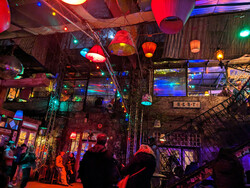
The restauant for dinner was picked from the guidebooks, Barack & Szilva (Peach and Plum) and we were lucky enough to get a table in spite of not having a reservation. After a fine meal, we went for drinks at the first and most famous "ruin bar" in Budapest, Szimpla Kert. If you don't know the term, the ruin bars, ("romkocsmák"), began to appear in the post-Communist era as "entrepreneurs" took over abandoned buildings -- schools, factories, apartment blocks -- filled them with kitsch, ramshackle fittings and furniture, and turned them into pubs and clubs.
|

|

|
| Szimpla Kert. |
Szimpla Kert. |
Jesus. |
^UP^


